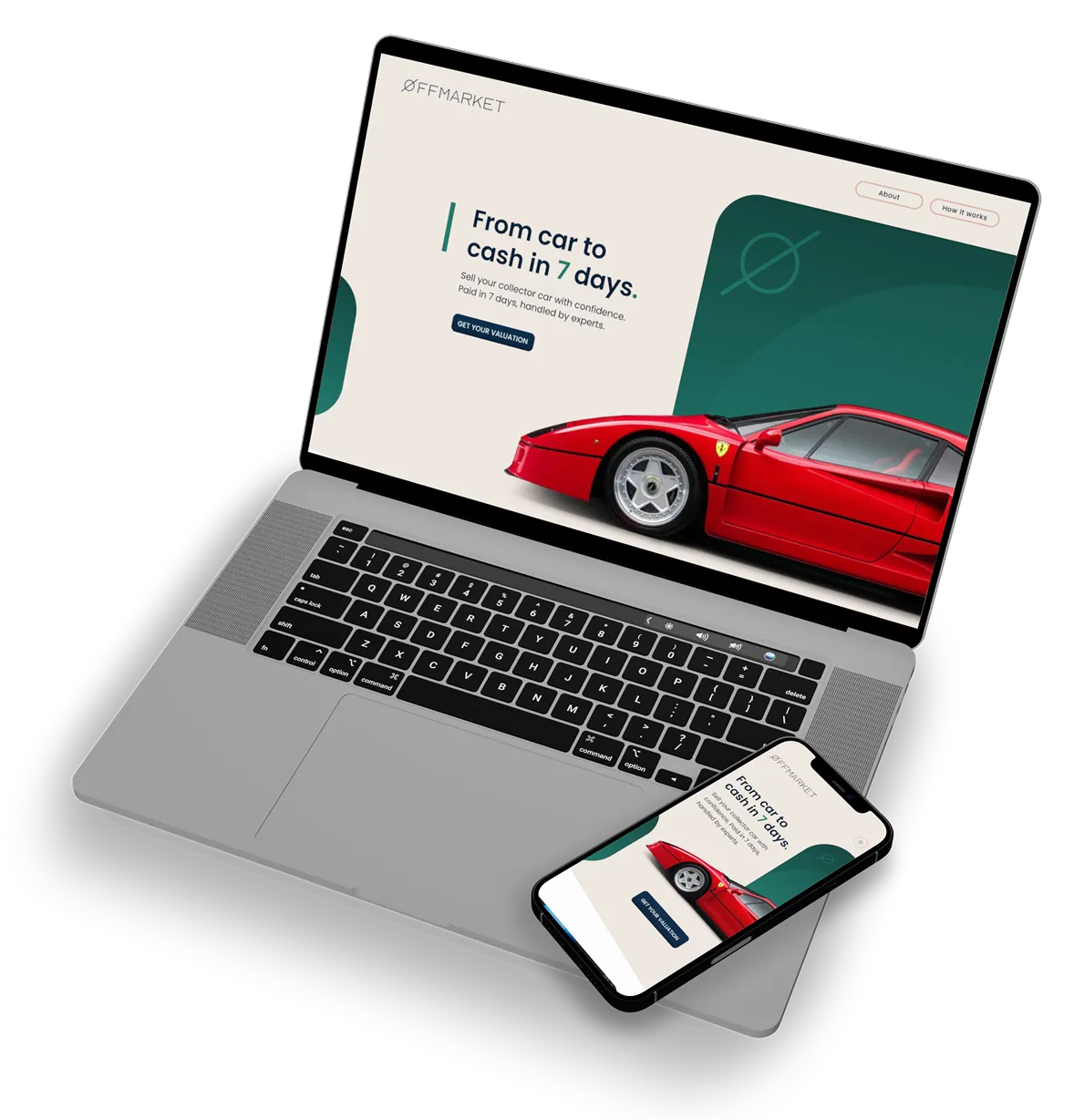

Offmarket specialised in helping owners sell luxury and collectible cars, but despite already operating as a business, it had yet to establish it’s brand identity, and had no customer-facing online presence.
Role:
UI Design
Team:
UI | UX | Product/Delivery | Engineering
Agency
Somo

Offmarket needed a way for potential customers to discover the service and make enquiries online.
I was brought in as a freelance designer to help shape their web experience, working across UX, UI and visual identity.
The challenge was to create something that felt credible to owners of luxury and collectable cars, clearly explained how the service worked and made it straightforward for customers to submit their vehicles for valuation.
The client had a clear idea of how Offmarket should operate and what information he needed from customers. What hadn't been established was how that would translate into the online experience.
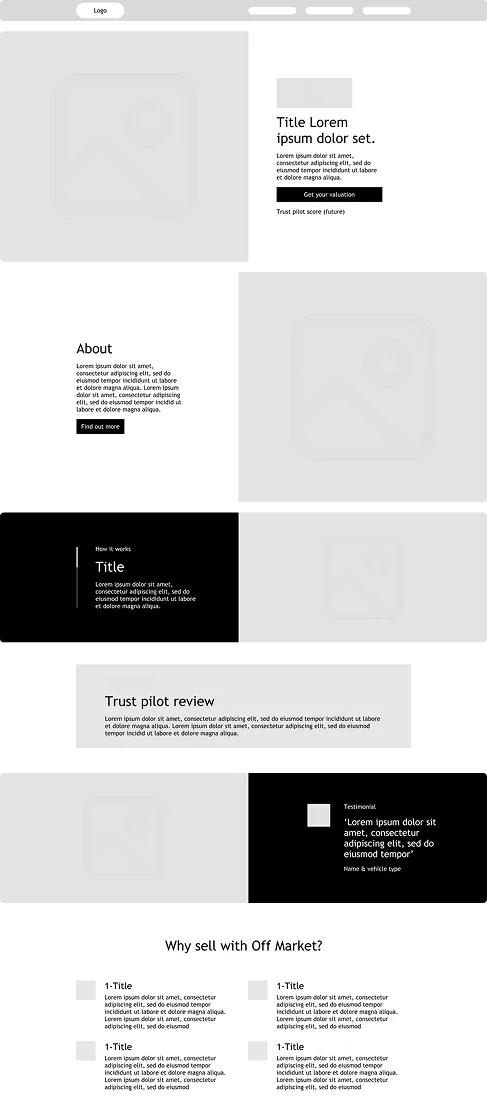
The initial brief covered a landing page to introduce the service, a way for customers to submit their vehicles for valuation, plus a series of emails to support the process.
The starting point was to break these requirements down into individual journeys, exploring how customers would move through the site
and how we could make the valuation process feel straightforward without losing the detail Offmarket needed.
The client had a clear idea of how Offmarket should operate and what information he needed from customers. What hadn't been established was how that would translate into the online experience.
The initial brief covered a landing page to introduce the service, a way for customers to submit their vehicles for valuation, plus a series of emails to support the process.
The starting point was to break these requirements down into individual journeys, exploring how customers would move through the site
and how we could make the valuation process feel straightforward without losing the detail Offmarket needed.
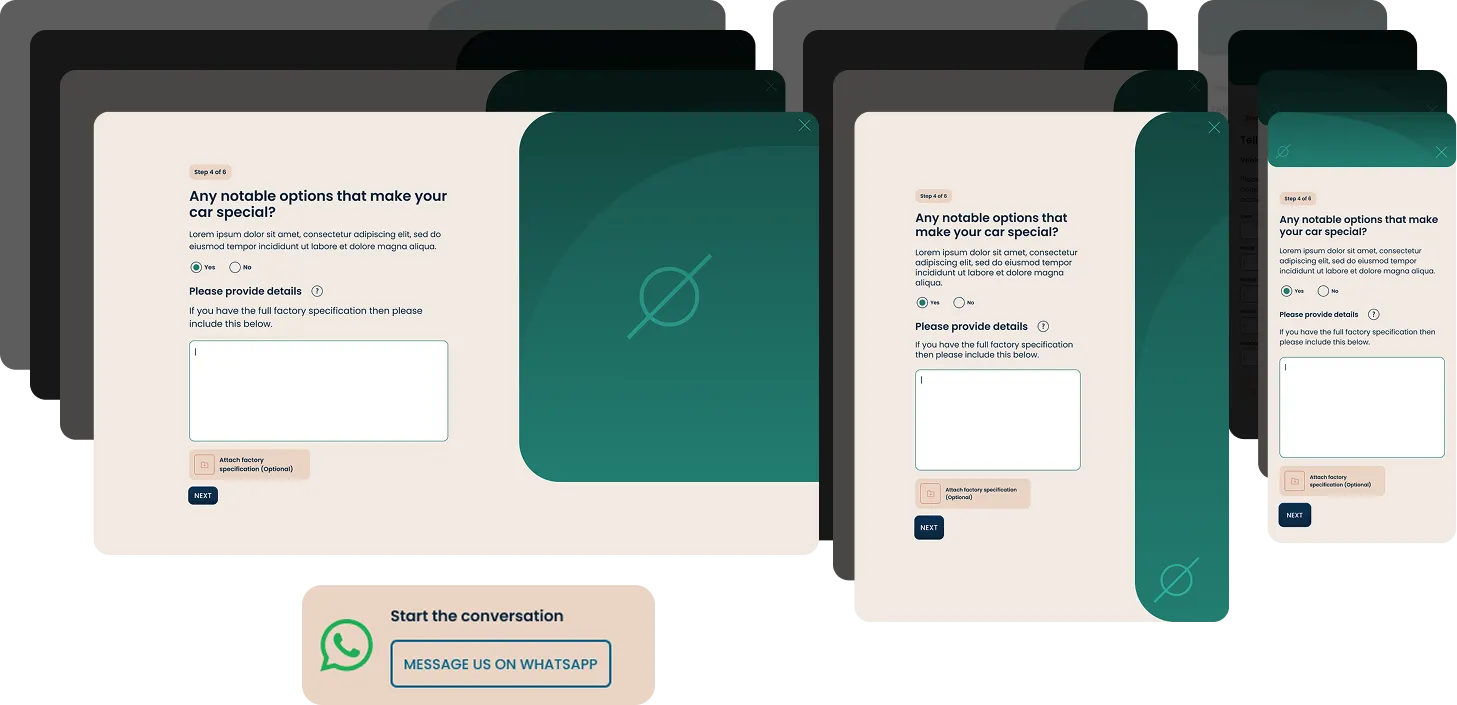
To provide an accurate valuation, Offmarket needed to collect a lot of information about each vehicle. Make, model and mileage were just the start. Service history, condition, modifications and any special features were also required.
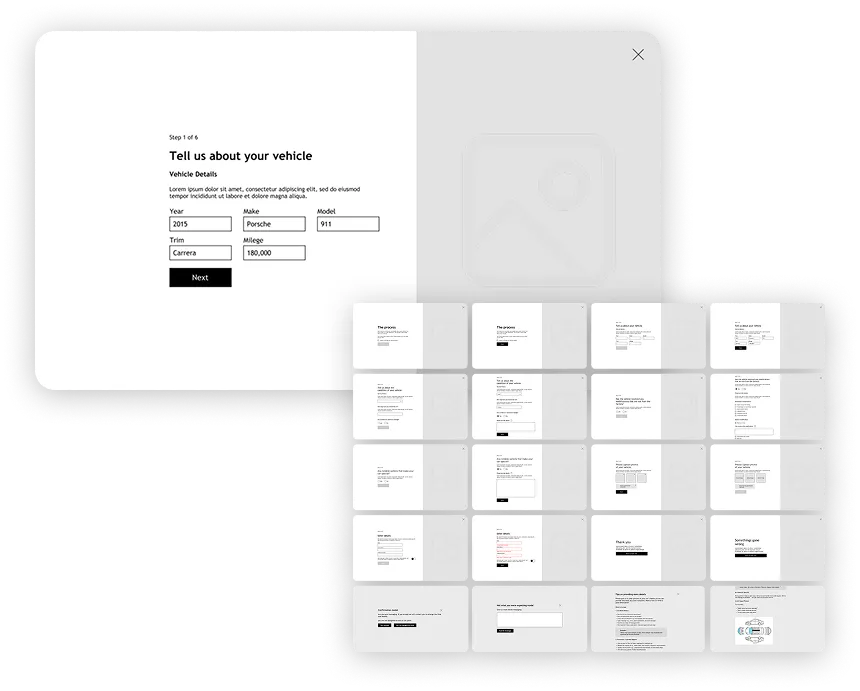
Rather than presenting customers with one long form, I explored breaking the process into a series of smaller, more manageable steps, grouping related questions together.
The aim was to give customers a clear understanding of what was being asked of them, presenting the right information at the right moment.
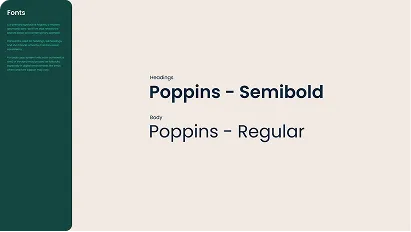
Once we'd settled on a direction, I developed a lightweight style guide to establish some consistency across the site, while leaving room for the identity to evolve as the business grew.
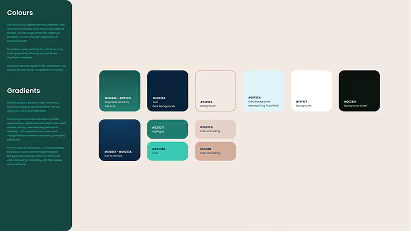
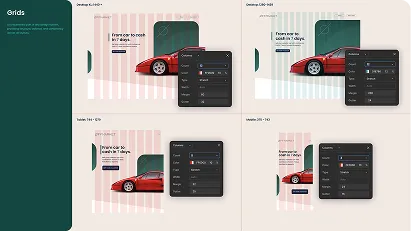
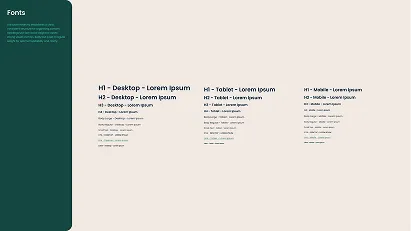
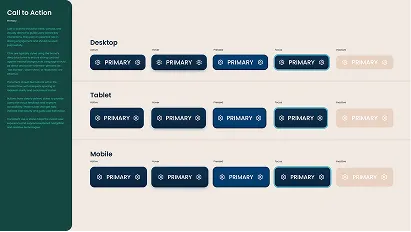
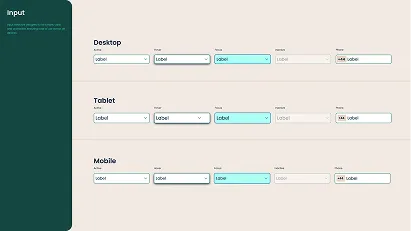
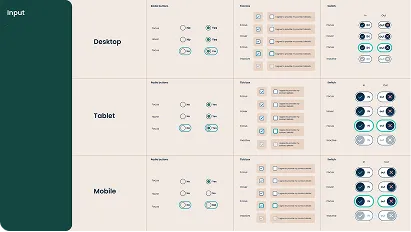
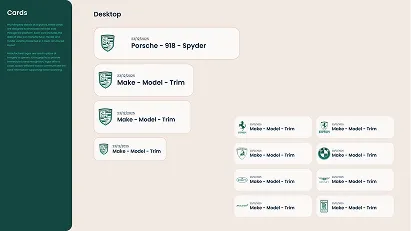
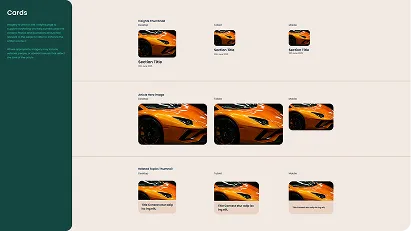

With the customer journeys mapped out and a visual direction agreed, I began bringing the two work streams together into the website UI.
This was an opportunity to refine the smaller details and see how the visual language held up when applied to the different journeys, from the homepage through to the more functional elements of the valuation process.
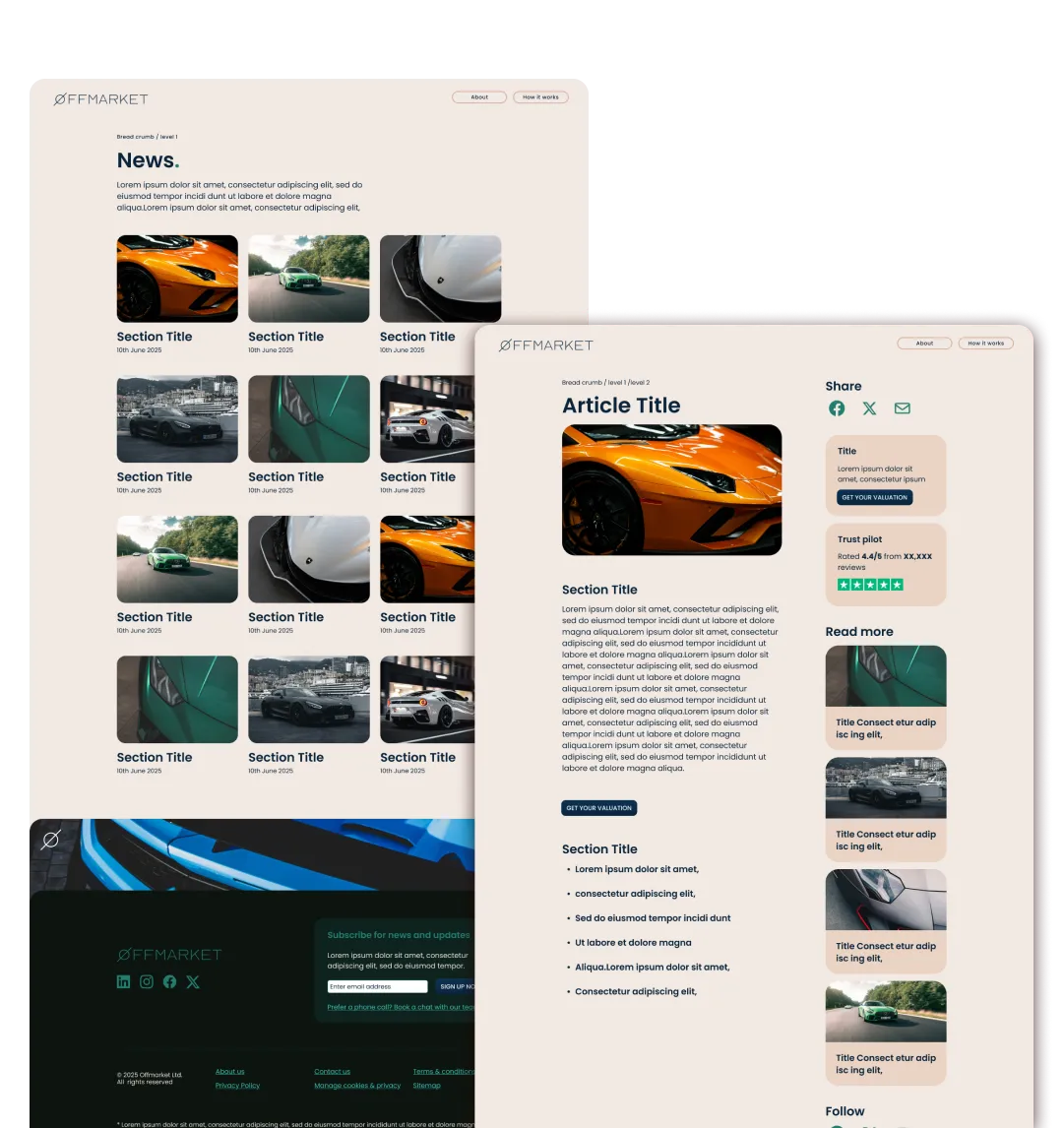
As the designs developed, I continued refining both the visual treatment and the interactions to make sure they worked together as a coherent experience.
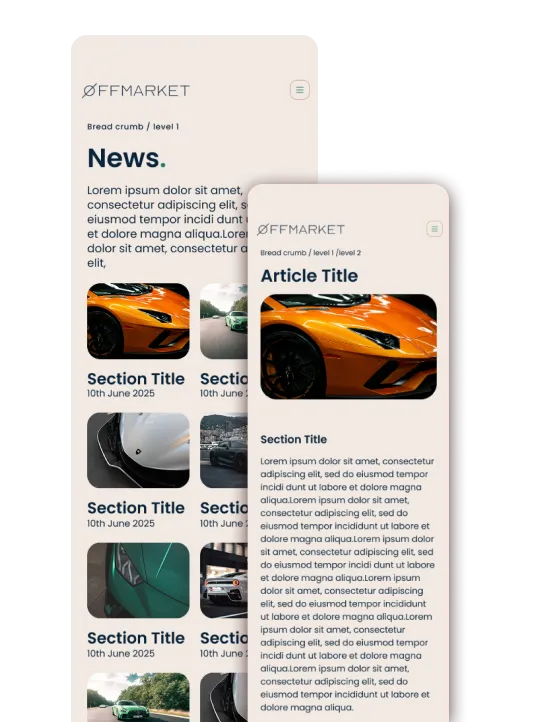
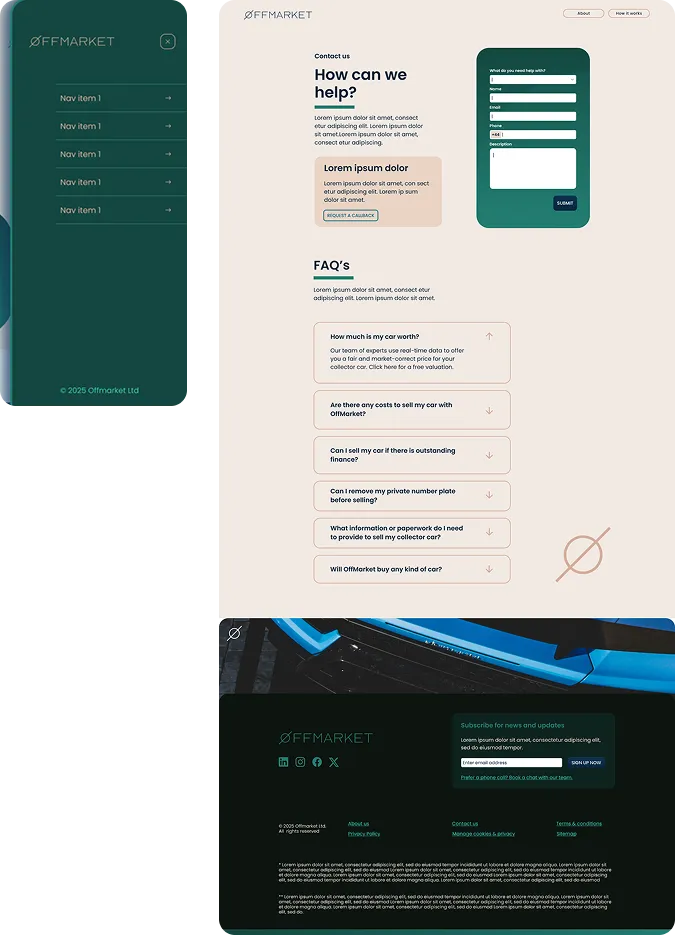
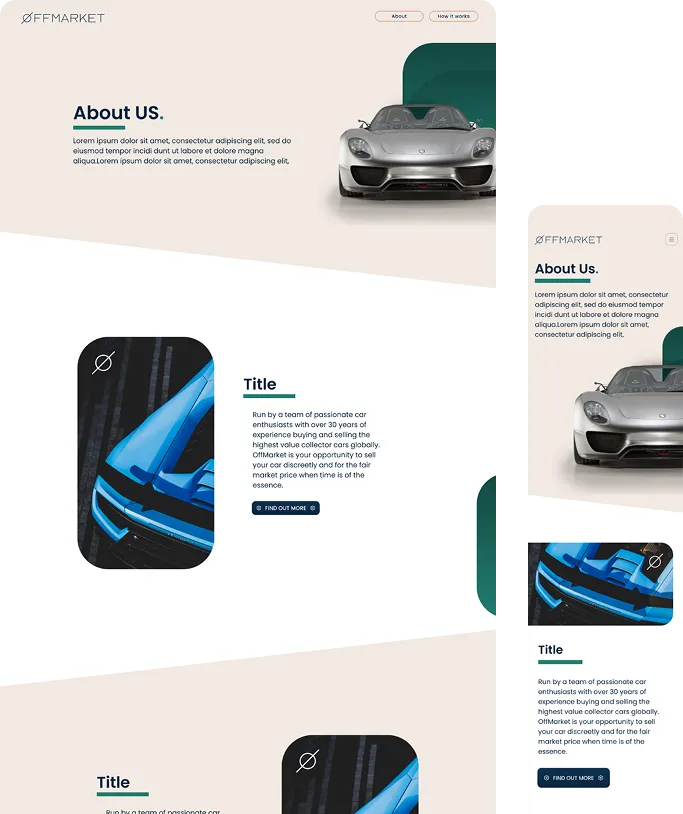
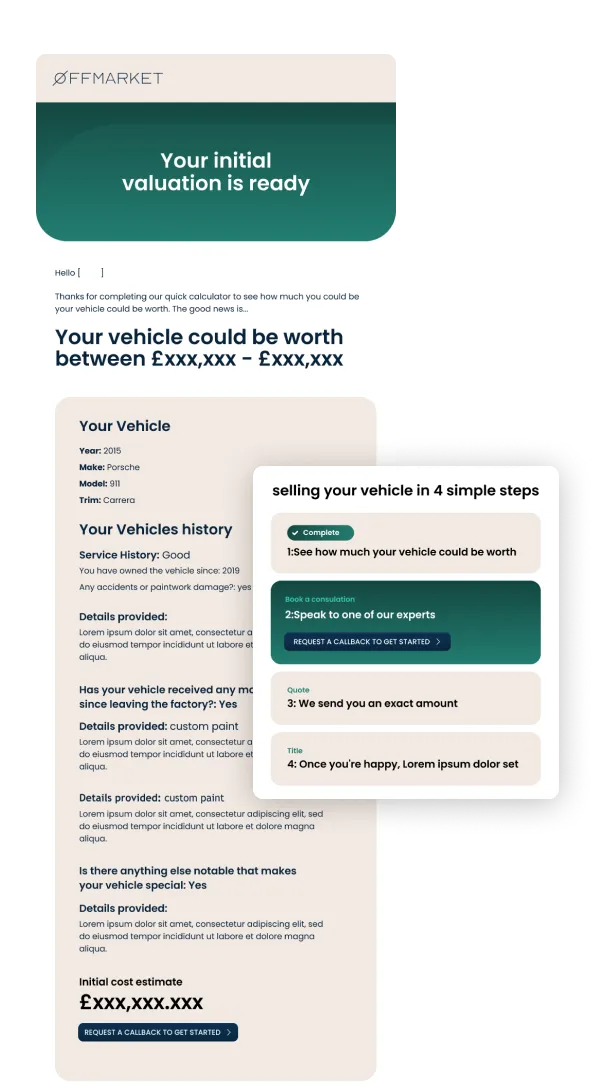
The customer journey didn't end once someone submitted their vehicle for valuation. Offmarket needed a way to keep customers informed as their enquiry progressed, with some stages requiring direct input from the team.
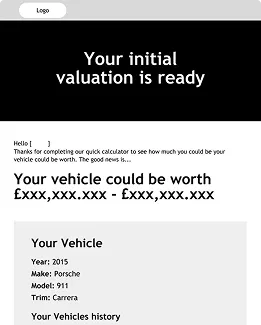
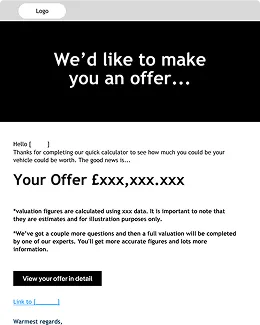
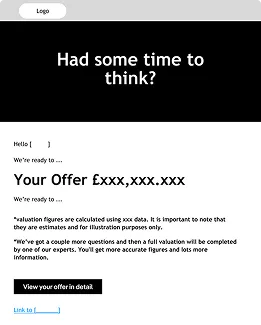
I designed a series of email templates covering everything from enquiry confirmations to valuations and offers, presenting detailed vehicle information clearly while maintaining the visual identity established for the website.
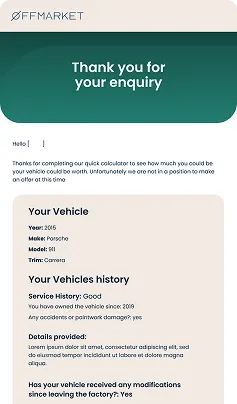
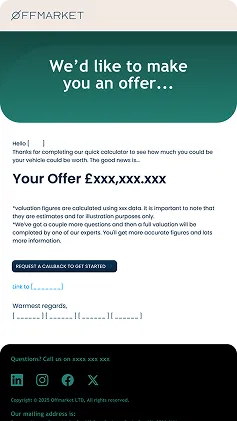
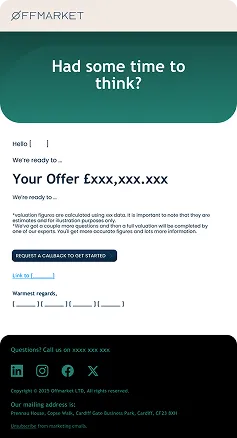
The customer journey didn't end once someone submitted their vehicle for valuation. Offmarket needed a way to keep customers informed as their enquiry progressed, with some stages requiring direct input from the team.
I designed a series of email templates covering everything from enquiry confirmations to valuations and offers, presenting detailed vehicle information clearly while maintaining the visual identity established for the website.
Due to budget and timing constraints, my involvement with Offmarket ended after the design work was completed, so I wasn't able to be part of the development or launch of the website.
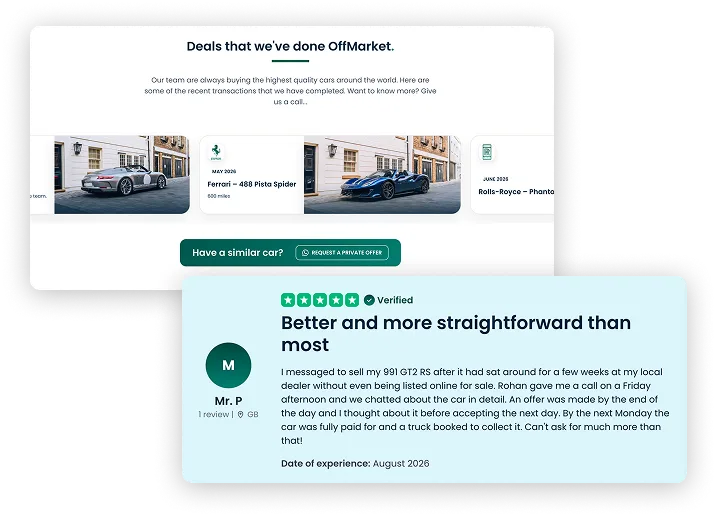
However, once the platform launched, it was encouraging to see that much of my original design work was included in the live experience.
Not everything was implemented as designed, but the overall visual direction, homepage and structure of the valuation journey remain recognisable in what exists today.
The opportunity to take ownership of the design process, from initial UX through to visual identity, was incredibly rewarding. It reinforced how much I enjoy being involved in a project from the early thinking through to the finer details of the design.
Working directly with the client helped me understand what the business needed, but the real satisfaction came from translating those requirements into an experience that felt intuitive and trustworthy for its customers.