


A secure AI-powered knowledge platform that enables engineers to find trusted answers in seconds, reducing downtime and making specialist knowledge available across the organisation.
Client: Pelletech
Industry: Manufacturing
Duration: 4 months
Role: Lead UI/UX Designer
Team: Product, Engineering
UX/UI
Design Systems
Visual Identity
Motion Design
Responsive Design
Maverick Partners were brought in to help a global packaging manufacturer solve a growing operational problem.
Critical engineering knowledge existed across manuals, service reports but, most importantly, in the experience of long-serving engineers.
As those engineers retired, decades of practical knowledge risked disappearing with them.

We would attempt this by developing an AI-powered proof of concept. The product would transform fragmented documentation into a conversational knowledge platform, giving engineers instant access to trusted answers drawn entirely from their own expertise and documentation.
What began as an internal solution to preserve knowledge soon revealed a much bigger opportunity.
Our team hypothesised that by harnessing what made Dave such a valued team member, we would be able to help bridge the gap between years of expert knowledge and the next generation of engineers.
I joined the project during the proof of concept phase, where I was responsible for designing the early UX and user interface.
Working closely with a developer, we transformed an emerging concept into a functional prototype, creating a product that could be tested in real manufacturing environments rather than simply presented as an idea.
The proof of concept wasn't designed to validate user flows—it was built to answer a much bigger question: could this approach genuinely change the way engineers worked? The success of that prototype established the foundations for what would later evolve into Expert Advisor.
For engineers to rely on Expert Advisor during critical moments, the experience needed to feel trustworthy from the very first interaction.

Every response was generated from company documentation the open internet.

Engineers could ask questions in plain language, as if speaking to an experienced colleague.

Clear hierarchy, concise responses and minimal interaction to reduce cognitive load during critical moments.

Knowledge captured through notes, photos, voice recordings and videos, allowing the platform to improve over time.
Every design decision focused on reducing uncertainty, reinforcing confidence and fitting naturally into existing ways of working.
The proof of concept focused on answering a single question:
Could this approach genuinely improve the way engineers accessed knowledge under pressure?
Instead of building a feature-rich platform, we focused on delivering a complete product centred on the core user journey. This would allow us to validate the concept in real manufacturing environments before expanding the platform into a broader commercial offering.
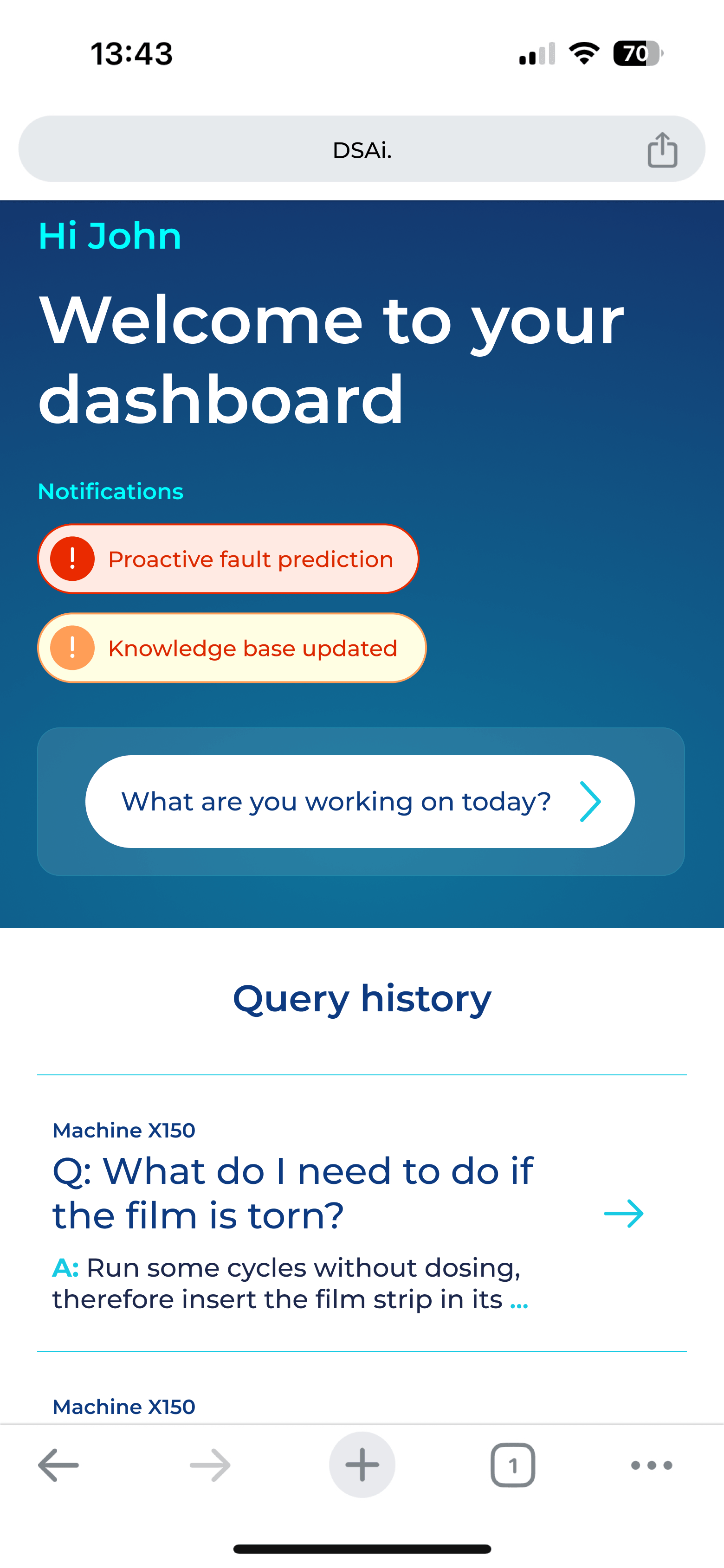

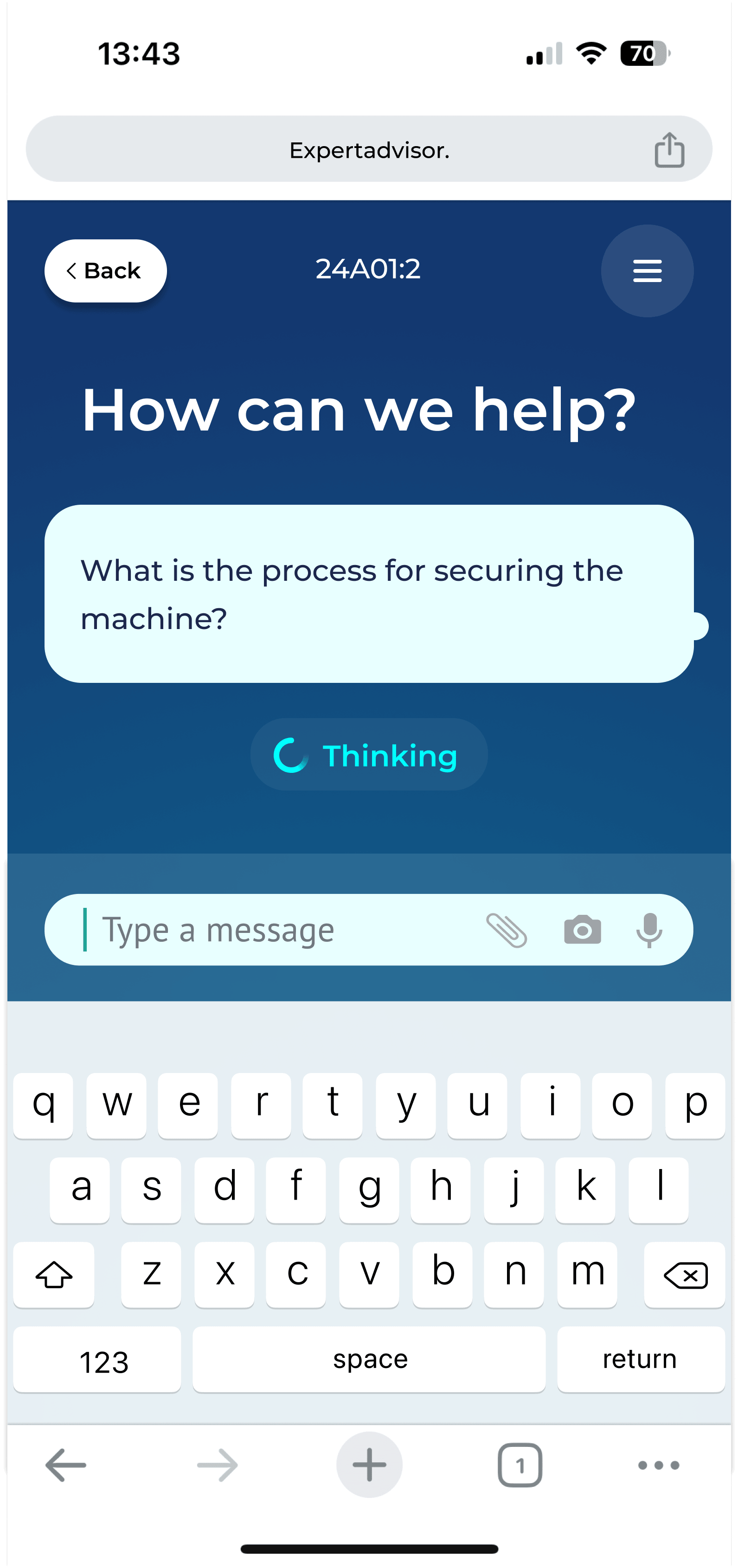


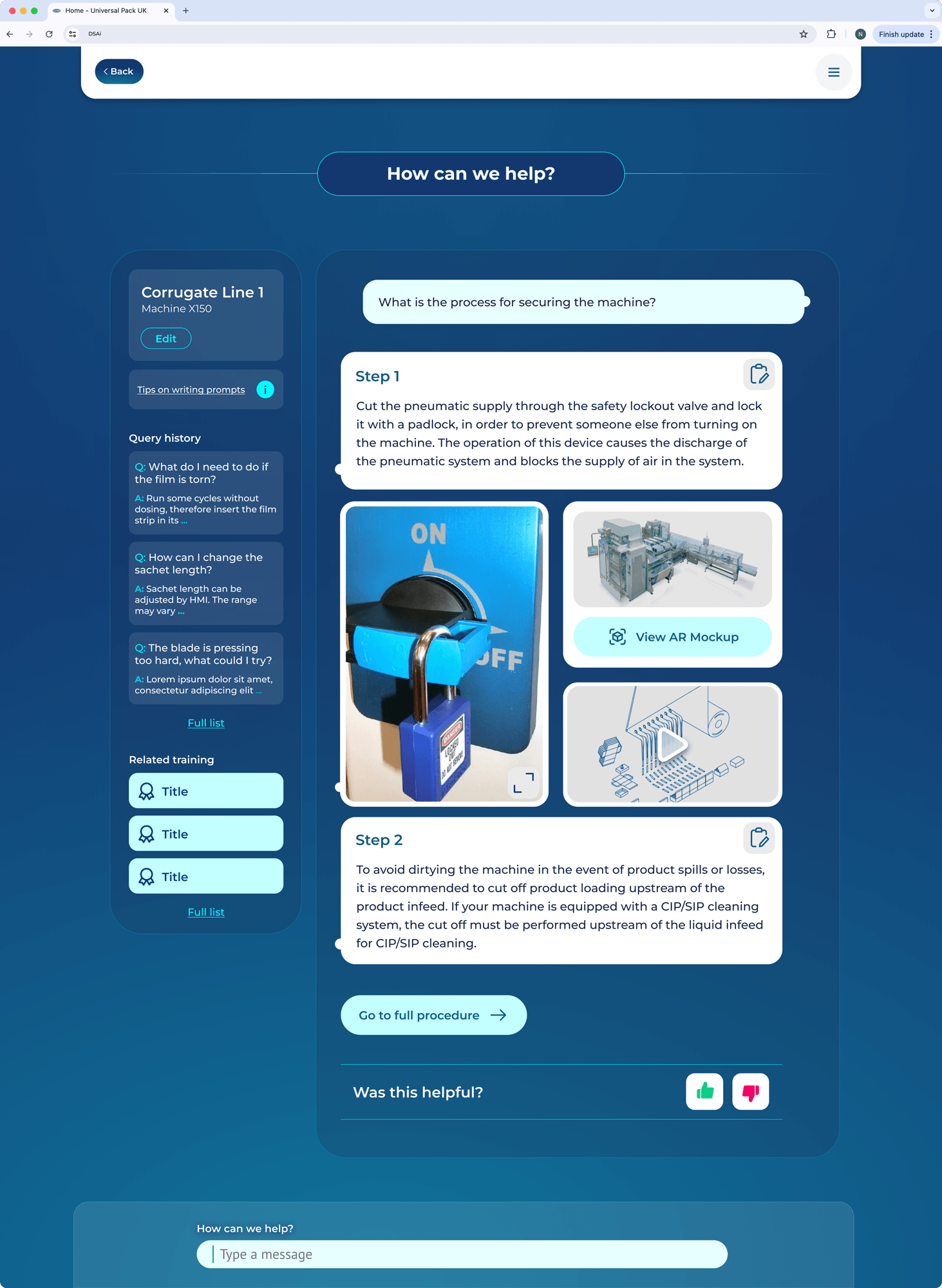
The proof of concept was tested in live manufacturing environments, where engineers relied on it during real maintenance and troubleshooting tasks.
Early results demonstrated that the approach wasn't just technically viable, it delivered measurable improvements to the way teams worked.
20% reduction in maintenance time
15% reduction in unplanned downtime
Beyond the numbers, the project revealed something equally important. Knowledge that had previously existed only in the experience of senior engineers was beginning to be captured, shared and reused across the wider organisation.
The proof of concept had validated the idea, opening the door for the concept to evolve.
The success of the proof of concept revealed an opportunity far beyond a single organisation. To bring Expert Advisor to a wider market, Pelletech was established as a new venture dedicated to transforming the concept into a commercial platform for manufacturers.
This marked a significant shift in the project's priorities.
The product needed to grow beyond its original scope, supporting broader workflows while presenting a more confident, market-ready experience. What had proven itself as a practical engineering tool now needed to communicate innovation, reliability and trust before customers had even used it.
As the product entered this new phase, my focus shifted towards defining a stronger visual language for the platform.
Working alongside a UX designer who expanded the underlying journeys, I concentrated on refining the interface, growing the component library into a scalable design system and ensuring the product felt both dependable for engineers and compelling to prospective customers.
The first release was designed to prove the idea. The next needed to sell it.
Early feedback showed the interface felt functional, but visually conservative, lacking the distinction needed to stand out in demonstrations.
The challenge became evolving the visual language without compromising the clarity and usability that had made the proof of concept successful.
Through a series of visual explorations, colour, typography, depth and interface styling were refined into a more confident identity that felt commercially credible while remaining practical for engineers.


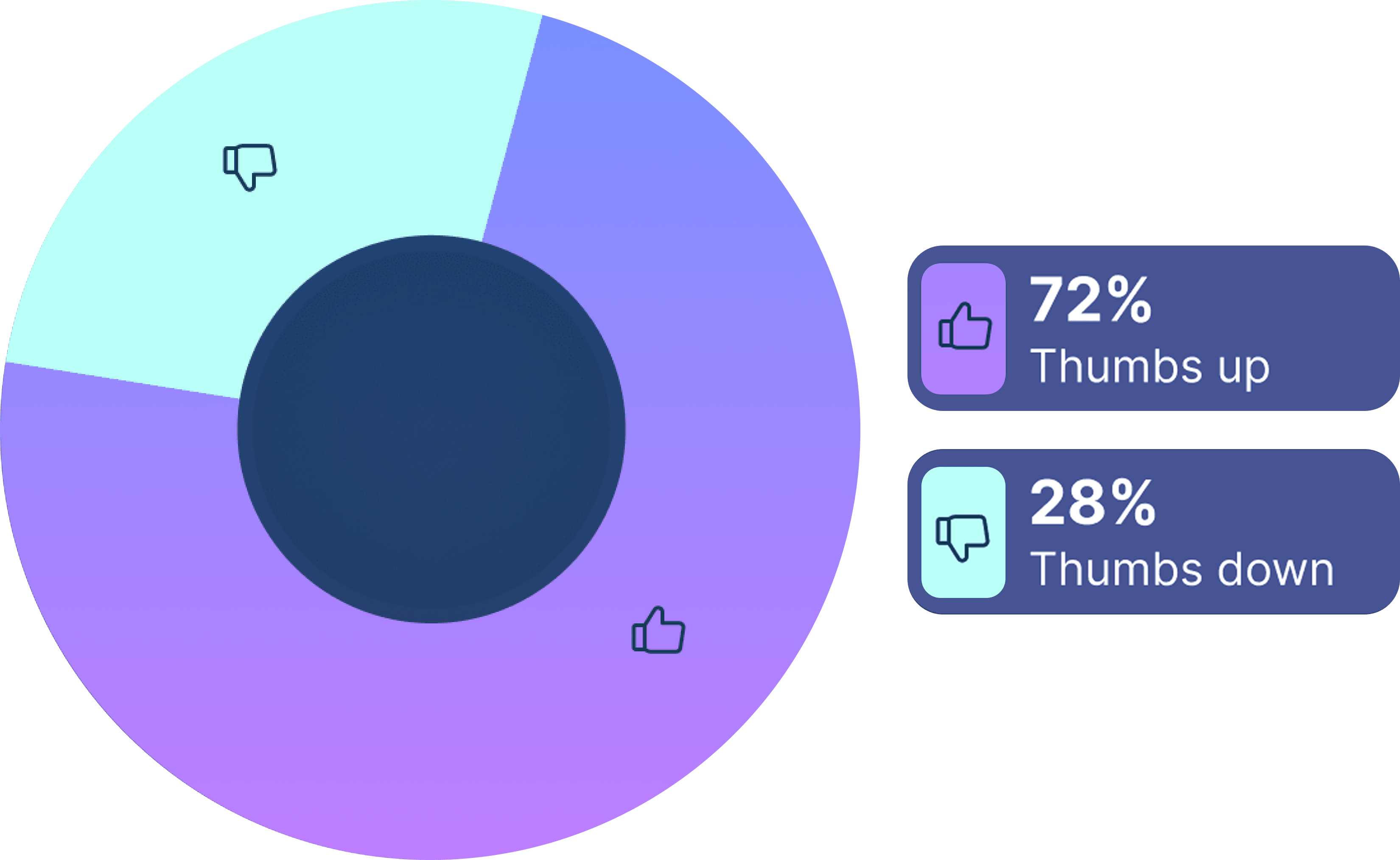


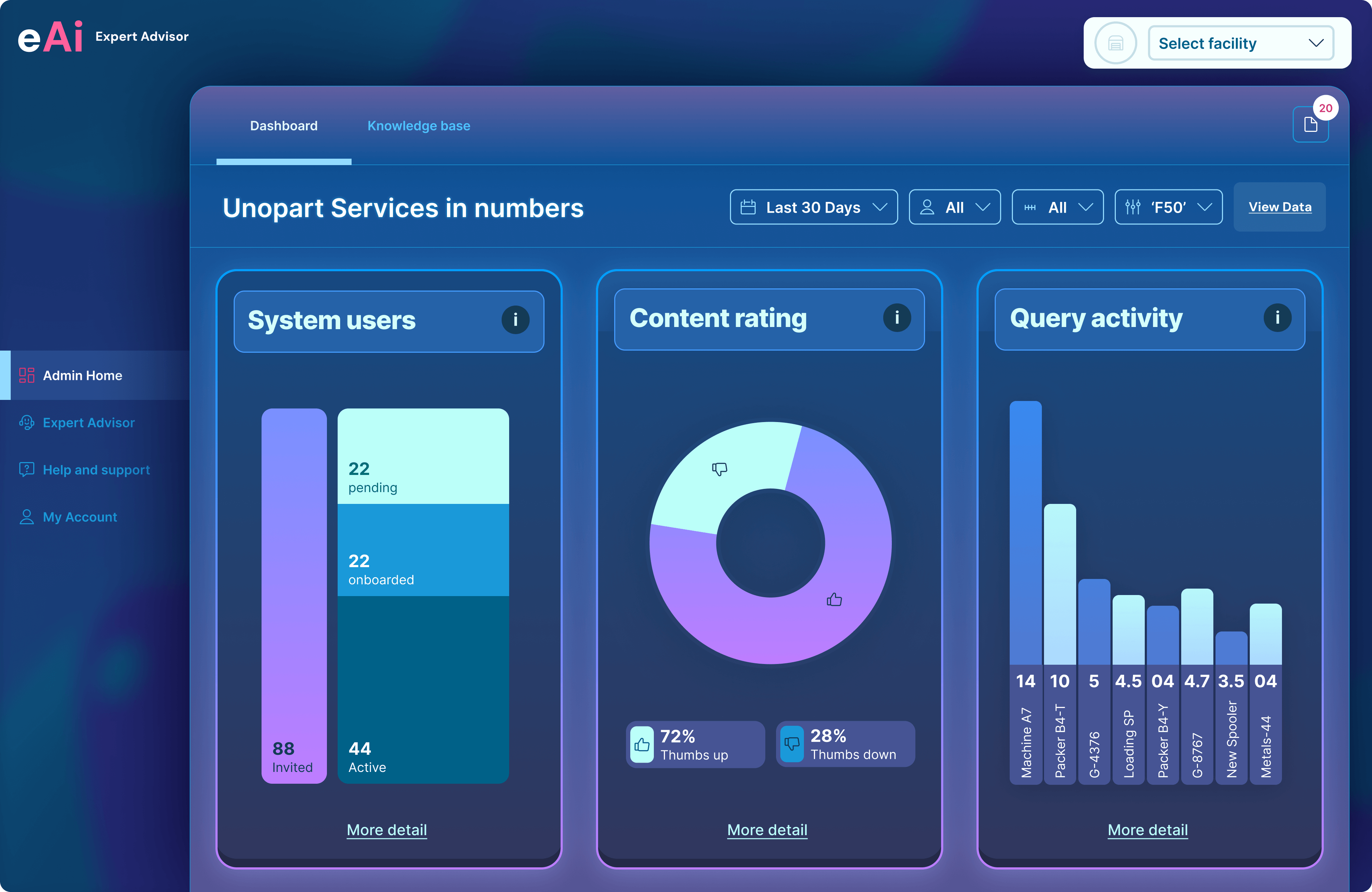
As the platform matured, visibility became just as important as retrieval.
Dashboard views gave administrators insight into adoption, content quality and query trends, helping organisations understand how knowledge was being used across their sites.
Every interaction was shaped around the reality of the factory floor.
Responses were intentionally concise, surfacing the most relevant information first while providing clear references that engineers could quickly verify before taking action.
Rather than adding complexity, the interface stayed focused on helping people solve problems with confidence and get back to work.

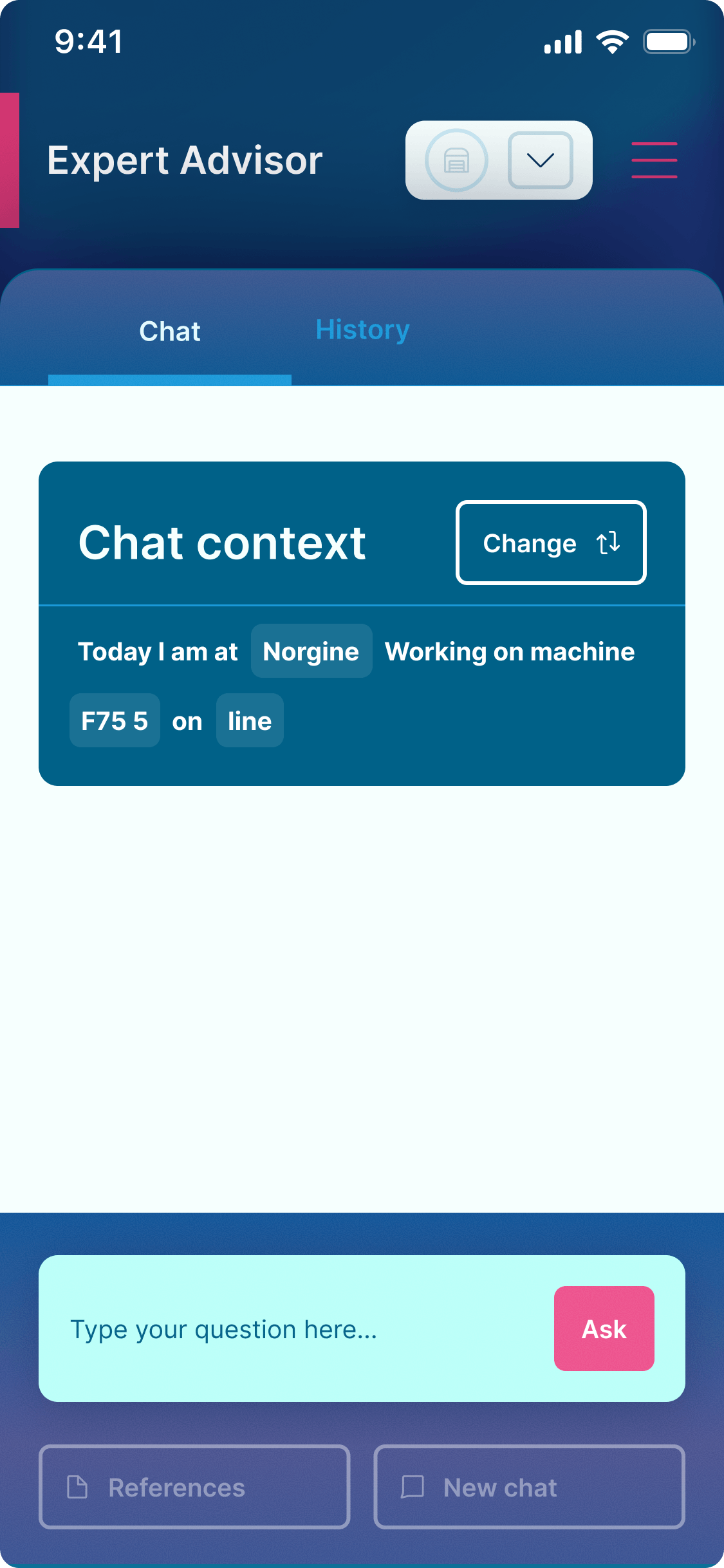
Designing for manufacturing meant designing for context, not just screens.
Rather than treating responsive layouts as a technical requirement, tablet and mobile became the primary experience, ensuring engineers could access trusted information naturally while working on the factory floor.
As Expert Advisor moved towards commercial launch, the challenge extended beyond the application itself.
Prospective customers needed to understand the product before they ever used it.
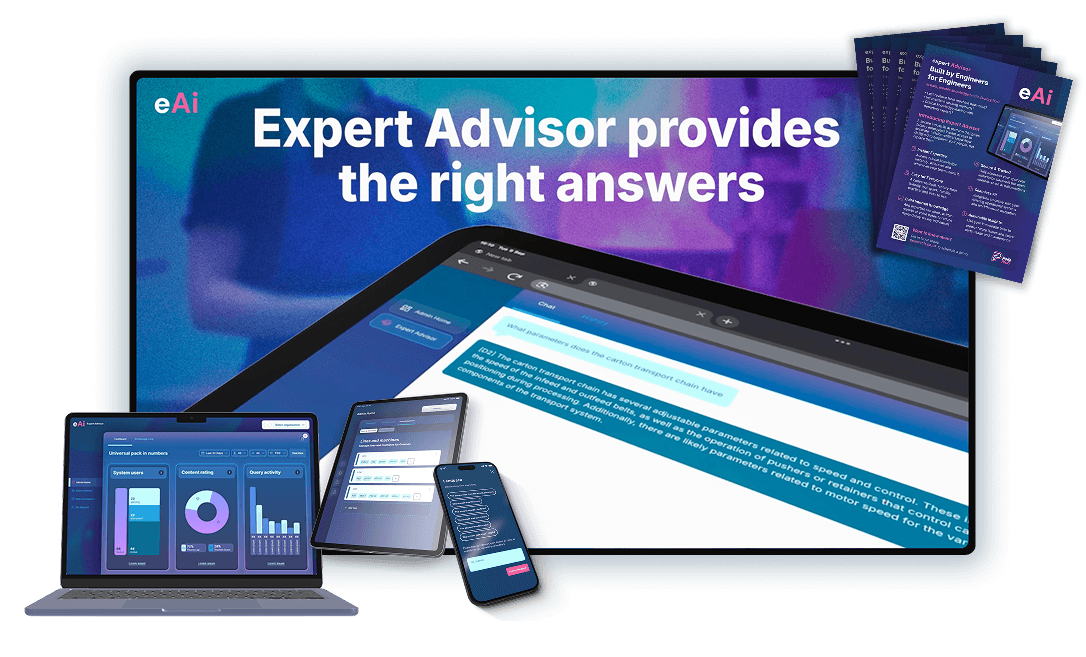
Alongside the product UI, I designed and produced a launch film, a supporting marketing website and printed collateral for trade shows, ensuring every touchpoint reflected the same visual language and communicated the product's value with clarity and confidence.
What interested me most about this project was that it wasn't really about AI. It was about making expertise accessible. We were never trying to replace experienced engineers, we were trying to ensure their knowledge could continue to help others.
The project reinforced something I value in my work, technology is at its best when it fades into the background, allowing people to focus on what they're actually trying to achieve.
UX/UI
BRANDING
MOTION
A secure AI system giving factory workers instant, reliable access to the right knowledge, helping businesses work faster with less downtime. Designed to support people, not replace them.
View ProjectUX/UI
Bringing a new customer first product to market, fast.
E.ON approached us with their digital ambition to become the market leader in utilities, radically transforming their organisation to become a digital-first business.
UX/UI
Making car buying easier. British Car Auctions came to us to design, develop, and launch their first-ever B2C digital venture. With other traditional sites filled with over-complicated technical language and figures causing user frustration. Cinch was the answer.
UX/UI
BRANDING
Disrupted by new digital entrants to the market and heightened customer expectations Halifax knew that the loss of 1 million users a month from the homepage needed to be addressed. Working with us, we looked to transform the customer experience.
View ProjectUX/UI
Working closely with ŠKODA we designed, developed and launched a staff facing iPad application across over 150 dealerships across the UK, giving ŠKODA retail staff the best digital tool to improve both the staff and customer experiences.
View ProjectUX/UI
ILLUSTRATION
ANIMATION
MOTION
One of the proudest moments in my career to date, originally dubbed 'Project P' (working title), a VR experience (built in Unreal) aimed at illuminating the everyday challenges faced by disabled individuals.
View Project