


La Horla Collective was a Brighton-based creative night bringing together animators, illustrators, musicians and performers through live events combining projection, animation and visual storytelling.
Context: Self-Initiated
Project Type: Live Events
Duration: 2 years
Role: Co-Founder Design Director
Creative Direction
Experience Design
Animation
Illustration
Live Visuals
La Horla began through an unlikely connection.
Alex was my guitar teacher and, having seen some of my illustration and animation work, suggested that we might be able to create something together. He also knew that my partner Oli worked in the music industry, with experience organising festivals.
Over drinks, Alex explained how difficult he had found it to put on shows for his own project, an experimental performance combining live music with re-edited footage from forgotten horror films.
Rather than trying to fit the act into existing nights, he wondered whether we could build a night around it and attract other like-minded performers along the way.
The idea quickly grew beyond music. I wanted an outlet for illustration and animation, while Oli could bring her live-event experience and interest in making and selling craft work.
Between the three of us, the beginnings of a format emerged: live performance, visual art, a makers' market with animation projections tying everything together.
All we needed was a name.
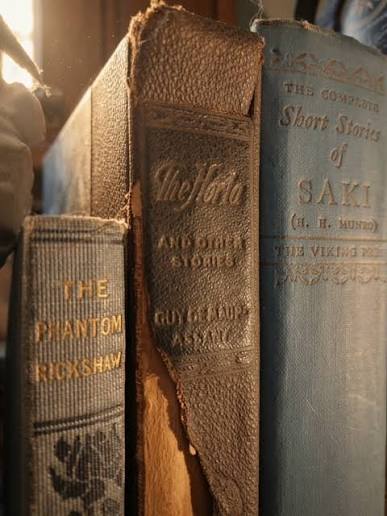
We borrowed 'Horla' from Alex's act, itself named after Guy de Maupassant's supernatural short story.
It was intended as a working title while we figured everything else out.
The longer we used it, the more it felt like ours.
Brighton has an incredibly active creative scene, but finding opportunities to show work can still be difficult, particularly for artists working outside more traditional spaces or disciplines.
Visual artists could exhibit and sell their work, musicians and performers could take to the stage, while animation and projection transformed the space around them, different forms of creativity sharing the same night.
Rather than competing for space within the existing scene, we decided to create our own.

OLI
Events & Organisation
Drawing on her experience in the music industry and live events, Oli took ownership of the Makers' Market, finding and coordinating artists and sellers while supporting the wider organisation of each night.
La Horla
ALEX
Music & Programming
With strong connections to Brighton's music scene, Alex took the lead on finding performers, shaping the programme and much of the practical organisation behind each event.


Nick
Visual Direction & Animation
I took the lead on La Horla's visual identity, promotional design, animation and projection work, developing the visual language that connected the different elements of each event.
La Horla brought together music, illustration, animation and live performance, so its identity needed to accommodate that breadth while still giving the nights a recognisable personality.
Horror became the common thread. We drew from B-movies, folk horror, punk and metal artwork, supernatural literature and creative visionaries such as Mike Mignola, Guillermo del Toro and Dario Argento.
Rather than reproducing any one influence, we wanted something strange, dark and playful enough to evolve with each event.
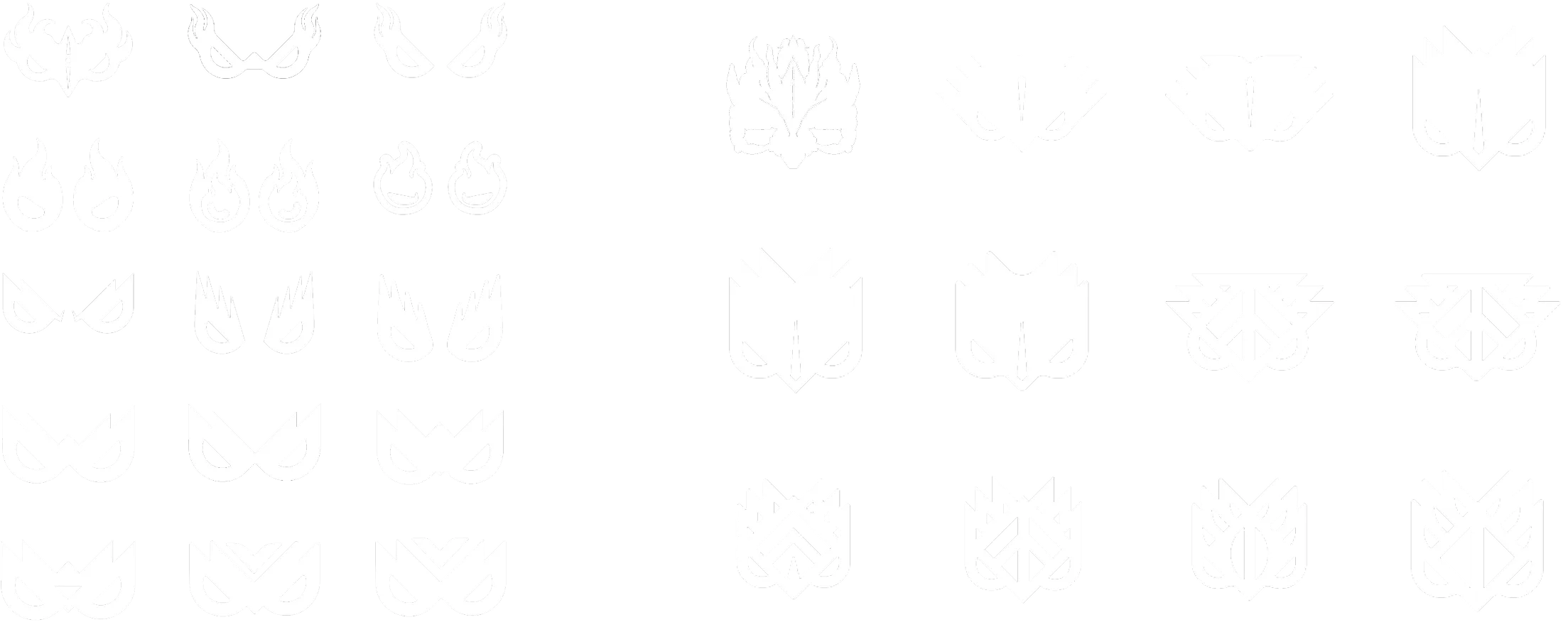
Alex's La Horla performances incorporated a distinctive mask, giving us an existing visual motif to build from
I explored how its shape could be simplified into a graphic mark that felt recognisable at small sizes but retained some of the unsettling character of the original.
That mark became the visual anchor for the collective, appearing across posters, social content and within the projected visuals themselves.
One of the earliest ideas explored the darker humour we wanted La Horla to have.
Under the line #notacult, I experimented with imagery associated with infamous cults including Heaven's Gate, the Manson Family and Jonestown, deliberately contrasting serious subject matter with playful typography and emojis.
It was intended as a knowing reference for those who recognised the imagery, a way of signalling that La Horla occupied a darker, stranger corner of Brighton's creative scene.
Ultimately, the idea pushed the provocation too far. We moved on, but the experiment established something that remained important:
The identity could be dark without taking itself too seriously.
Each La Horla event developed its own theme, from Halloween and Dark Christmas to Valentine's Day Massacre and the Summer Solstice.
With events happening regularly, the posters needed to be produced efficiently while still giving each night its own identity.
I created a reusable template that kept the logo, typography and information hierarchy consistent, while the illustration and colour palette changed to reflect the theme of each event.
This gave each night room to feel different while still clearly belonging to La Horla.
From the beginning, animation was intended to be part of La Horla rather than an addition to it.
Posters became animated social content, the logo was reinterpreted through motion, and the same visual language began appearing across the projections surrounding the performers.
For the first event, I worked quickly with found and public-domain imagery, combining it with illustration and animation to create short loops for the venue.
A beach scene might become a Lovecraftian landscape; mundane imagery could be pushed somewhere stranger..
These early experiments established the visual approach that the projection work would build on.
The projections were intended to do more than simply showcase animation.
Between performances, they would act as an ambient backdrop, filling the space with movement and maintaining La Horla's atmosphere while the stage was empty.
This meant thinking beyond the animations themselves. Scale, position, lighting and the relationship between projection and performer all affected how the room felt. The visuals needed to transform the space without overwhelming what was happening on stage.
3D visualisation
Our first event took place in Brightons Temple Bar.
For the first time, the identity, performers, projections and makers' market all came together in the same space.
It worked, but exposed the rough edges in our setup. We arrived expecting to use the venue's projection system, only to discover we couldn't connect to it. With our own projector unable to reach the existing screen, we improvised: a bedsheet draped over a ping-pong table became our embarrassing but functional solution for the night.
Videos were still triggered manually from a laptop, giving us little control over timing and transitions, while the room layout didn't create the relationship between performers, visuals and audience we'd imagined.
The night proved the idea could work, but also showed us how much work we had to do.
The first event made it clear that improving La Horla wasn't just about polishing the visuals.
We moved away from a conventional gig layout, arranging seating in smaller groups around the performance space. It made the night more intimate and social, allowing the audience to talk between acts and move more freely around the Makers' Market.
We also invested in our own projector and screen, giving us a more reliable setup and avoiding another bedsheet situation.
Hosting evolved too. Introducing performers and keeping things moving became part of my role. Compèring never came completely naturally, but each event made me a little more comfortable in front of our Audience.
As La Horla developed, we became more ambitious, I wanted the animation match that ambition.
Seeing the scale and quality of the visuals at a major live show made me realise how much further I could push our own projection work.
It inspired me to return to 3D animation, something I had barely touched since university.
Each new piece started with an idea or sketch, followed by working out how I could realistically achieve the effect. This often meant learning unfamiliar techniques such as liquid or force simulations along the way.
Unlike conventional animation, these sequences weren't designed to demand someone's full attention. Movement and pacing were deliberately restrained, creating ambient worlds that enriched performances without distracting from the artist on stage.
As the events developed, so did the library of animation. Each experiment became another visual I could draw from, combine and reuse across future performances.
As the library of animation grew, simply playing pre-rendered sequences became increasingly limiting.
For performances, I began experimenting with VJ software, giving me more control over which visuals appeared, when they changed and how they transitioned throughout the night.
This shifted the projections from a passive backdrop into something I could actively perform, selecting and combining visuals in response to what was happening on stage.
Rehearsal and testing became increasingly important as I learned how the animations worked together and how much (or how little) visual intervention a performance needed.
What began as an experiment gradually became a recurring event.
With each event, new artists and performers became involved, some returned for future events, and familiar faces began appearing in the audience.
We later moved venue to the Rose Hill, which became La Horla's regular home. Its intimate layout allowed performances, projections, audiences and the Makers' Market to coexist more effectively.
La Horla later travelled beyond Brighton for a one-off event in Coventry, giving us the opportunity to see how the concept worked outside its usual setting.
As La Horla continued, the mix of contributors became increasingly eclectic.
Musicians, animators, performers, storytellers and visual artists all found different ways to use the space.
As La Horla developed, some performers began approaching me to create visuals specifically for their work. These collaborations went beyond my usual ambient loops, They were to responded directly to an original piece of music or narrative.
For 'Deliah's Heart', Alex had composed the music and shot footage for the piece, but the material wasn't working as he'd hoped. I reimagined it as a motion comic, developing the narrative and creating a visual style around the music.
Other collaborations became larger. For Ben Featherstone's 'Ghost Emma', I created an animated accompaniment spanning roughly 40 minutes of storytelling and music.
The projections were no longer simply framing the performances. They were becoming part of them.
Ben Featherstone,
Ha La Horla Collective Contributor
The Makers' Market remained deliberately small, with space for around four sellers at each event.
Rather than trying to grow it, we rotated contributors across different nights, giving different artists an opportunity to show and sell their work.
As La Horla became more established, interest occasionally reached beyond the events themselves.
I was invited onto local radio twice to talk about the collective, including one conversation that unexpectedly turned into a 90-minute interview about La Horla and my experience as an animator.
For a small DIY event, moments like these helped us reach beyond our immediate circle.
Some who first encountered La Horla as audience members later returned as contributors themselves.
That felt particularly significant: The night was beginning to provide the kind of open creative platform we'd originally wanted for ourselves.
La Horla gave me a space to experiment, learn new skills and push myself into areas I wouldn't naturally have explored.
I returned to 3D animation after years away, learned to create visuals for live performance and became more comfortable putting my work (and occasionally myself) in front of an audience. Not everything worked, but every event gave us something to learn from.
More than anything, La Horla taught me the value of creating opportunities rather than waiting for them. We created the kind of space we wanted to be part of, and seeing others go from audience members to contributors felt like meaningful validation.
When Alex relocated, maintaining the equal split of work became increasingly difficult, so we decided to pause the events.
We've talked about bringing La Horla back one day. There are no concrete plans yet, but as any true horror fan knows...
The monster never truly dies at the end of the movie.
There's always a sequel.
UX/UI
BRANDING
MOTION
A secure AI system giving factory workers instant, reliable access to the right knowledge, helping businesses work faster with less downtime. Designed to support people, not replace them.
View ProjectUX/UI
Bringing a new customer first product to market, fast.
E.ON approached us with their digital ambition to become the market leader in utilities, radically transforming their organisation to become a digital-first business.
UX/UI
Making car buying easier. British Car Auctions came to us to design, develop, and launch their first-ever B2C digital venture. With other traditional sites filled with over-complicated technical language and figures causing user frustration. Cinch was the answer.
UX/UI
BRANDING
Disrupted by new digital entrants to the market and heightened customer expectations Halifax knew that the loss of 1 million users a month from the homepage needed to be addressed. Working with us, we looked to transform the customer experience.
View ProjectUX/UI
Working closely with ŠKODA we designed, developed and launched a staff facing iPad application across over 150 dealerships across the UK, giving ŠKODA retail staff the best digital tool to improve both the staff and customer experiences.
View ProjectUX/UI
ILLUSTRATION
ANIMATION
MOTION
One of the proudest moments in my career to date, originally dubbed 'Project P' (working title), a VR experience (built in Unreal) aimed at illuminating the everyday challenges faced by disabled individuals.
View Project