


Inspired by my experience caring for my stepdad, Walk a Mile explored whether immersive storytelling could help people understand a life they'd never lived. Through virtual reality, participants stepped into Bill's world, experiencing the everyday realities of Parkinson's from his perspective.
Client: Somo Global
Project Type: Innovation
Duration: Placeholder
Role: Experience Design, Creative Direction, Illustration
Creative Direction
Experience Design
Narrative Design
Illustration
Prototyping
One afternoon, my agency's Head of Design showed me something special. Google's 'Through the Dark' an award-winning interactive digital story exploring the emotional impact of childhood leukaemia.
Rather than simply telling its audience what to feel, it used interactivity to draw people into a beautifully crafted experience, creating a level of empathy that traditional media rarely achieves.
It wasn't the technology that captured our attention. It was the emotion.
He challenged me to explore whether our agency could create something with the same ambition. There were no constraints on platform or technology, only one objective:
Create an experience that would move people.
Inspired by Through the Dark, the next question became: what story should we tell? For me, the answer was immediate.
Parkinson's was already deeply woven into my life. My stepfather had recently passed away following a fifteen-year battle with the condition, and I'd spent years watching how it reshaped not only his life, but the lives of everyone around him.
Despite affecting millions of people worldwide, public understanding often stops at the visible symptoms. While some of its greatest challenges remain unseen, from changes in cognition and balance to the emotional impact on partners, families and carers.
I didn't want people to simply know more about Parkinson's. I wanted them to better understand what it feels like to live with it.
This felt like an opportunity to tell a story that deserved to be experienced, not just explained.
Ron Alder - My stepdad and Parkinsons sufferer for over 15 years
I led the concept, experience design and creative direction for Walk a Mile, writing the narrative, designing the interactions, illustrating the protagonist and environments, storyboarding key moments and working closely with developers and 3D artists to prototype the experience in VR.
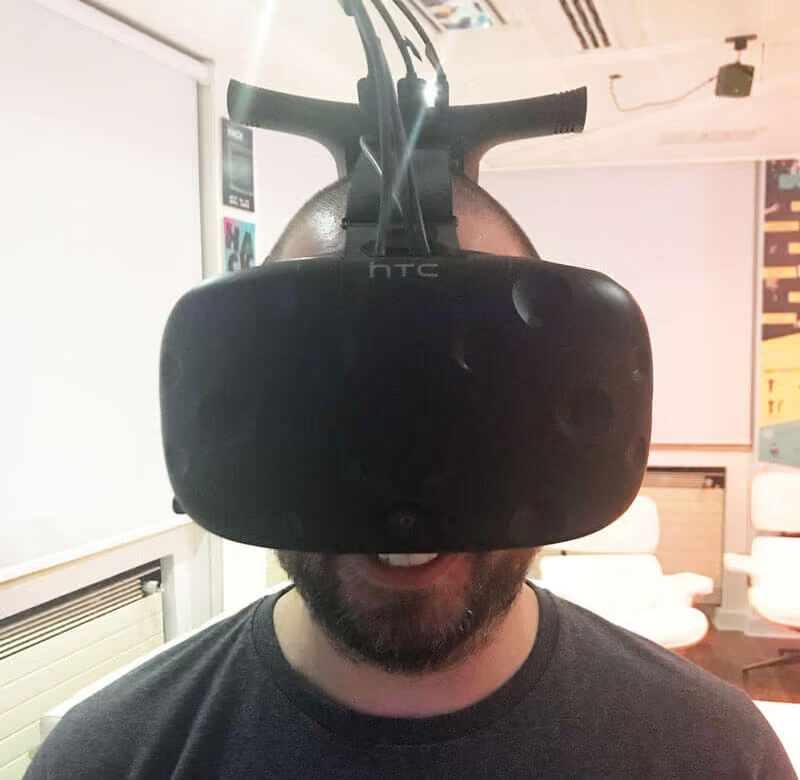
Around this time, our agency had recently acquired an HTC Vive headset, making virtual reality an exciting medium to explore.
At first, the appeal was simply the opportunity to experiment with an emerging technology. The more I explored it, however, the more I realised VR offered something that traditional media couldn't: perspective.
Rather than observing a story from the outside, users could inhabit it, experiencing events from another person's point of view. For a project built around empathy, that shift felt significant.
Experiences such as 'Dear Angelica' had already shown how immersive storytelling could communicate deeply personal subjects with remarkable sensitivity.
It reinforced my belief that VR wasn't simply an exciting new technology, it was the right medium for the story we wanted to tell.
The next challenge was translating the lived experience of Parkinson's into something people could inhabit rather than simply observe.
HTC Vive Headset
Duet: Glen Kane
'The Wayback Project'
The Wayback Productions
Dear Angelica: Oculus Story Studio
The goal would not be to simulate Parkinson's. No experience could accurately recreate the condition, nor should it attempt to.
Instead, the ambition would be to help people better understand what living with the condition can feel like by carefully shaping an emotional journey rather than simply a series of interactions.
It was important to me that the character wasn't defined by their diagnosis. They needed to feel authentic, with a life that existed long before Parkinson's entered their story.
The condition would shape their future, but it would never define who they were.
The narrative should follow the emotional rhythm of the condition. Everyday tasks would become increasingly difficult, social situations more isolating, and hidden symptoms would gradually emerge alongside the visible ones. Their world would feel like it were shrinking.
Rather than relying on dramatic set pieces, the narrative would focus on ordinary moments that quietly reveal how Parkinson's affects independence, relationships and everyday life.
The smallest interactions are often the most powerful, this is because they reflect the frustrations that so many people quietly experience every day.
Before writing a single scene, we agreed on the kind of story we wanted to tell.
These principles became a reference point, helping us decide what enriched the experience and, just as importantly, what cheapened it.

Human Before Diagnosis
The character's diagnosis should never define them. Audiences connect with the character before understanding the condition.

Everyday Moments
The most meaningful moments weren't extraordinary. They were the familiar routines that quietly become more difficult over time.

Beyond the visable
Look beyond the symptoms people expect. Explore the cognitive, emotional and social realities that often remain unseen.

The Ripple Effect
Parkinson's doesn't affect one person alone. The experience should recognise the emotional impact on partners, families and carers as well as the person living with the condition.
If users were going to empathise with someone living with Parkinson's, they first needed to care about the person behind the diagnosis.
In this story that person would be Bill.

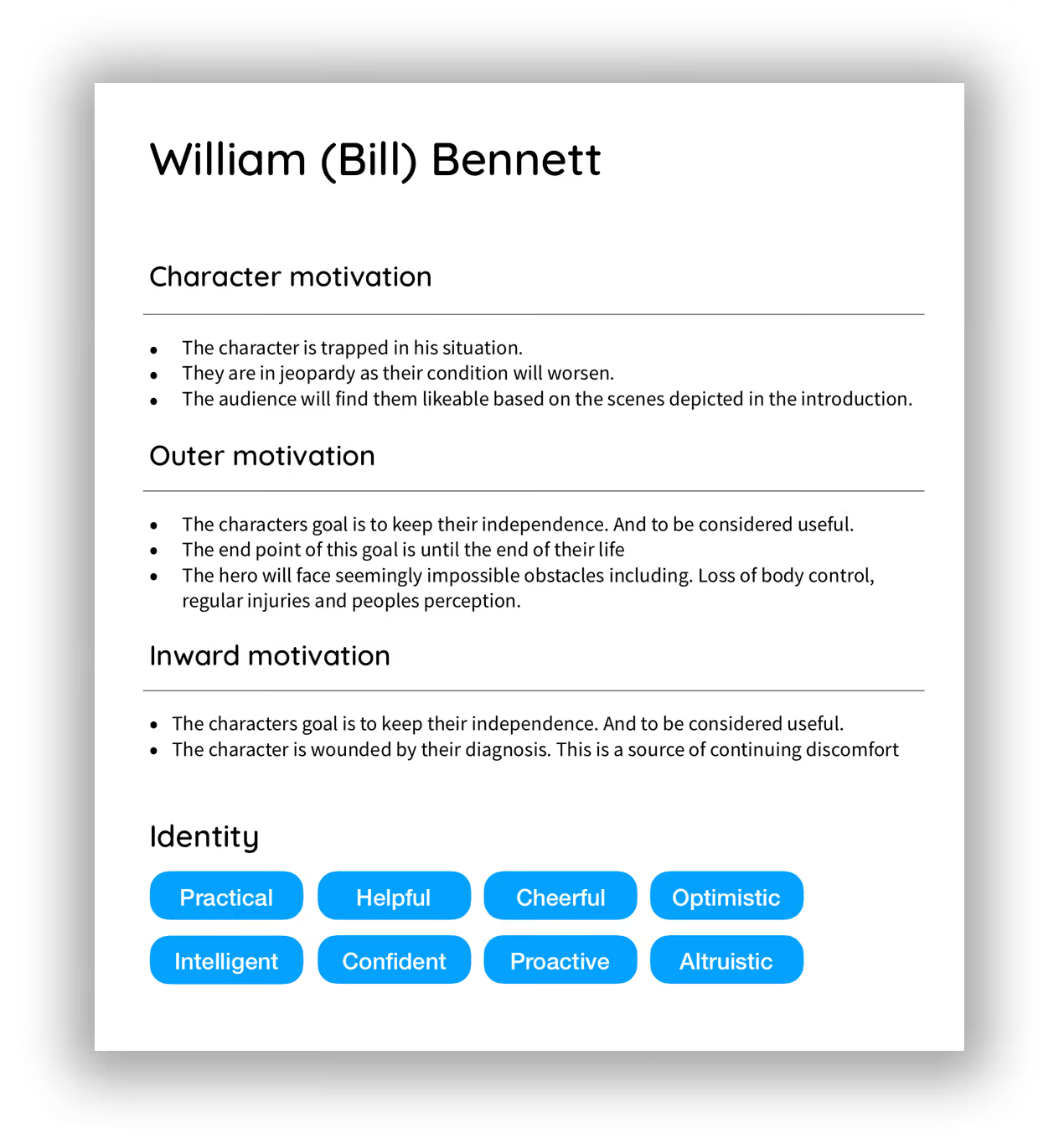
Name:William (Bill) Bennet
Age: 72
Occupation: Retired
Character Traits:Proud. Independent. Helpful.
Never asks for help even when he needs it.
Still insists on making breakfast every morning.
Not because breakfast matters.
Because independence matters.
A believable character isn't defined by personality alone. To understand how Bill would respond throughout the experience, we first needed to understand what drove him.
Those motivations shaped the narrative, influencing how Bill responded to setbacks, accepted help and gradually adapted to life with Parkinson's.
To give Bill's story a clear emotional arc, I drew on narrative frameworks including the Hero's Journey. Although Walk a Mile wasn't a traditional adventure, these frameworks helped pace Bill's emotional development, charting his gradual journey from independence to acceptance.
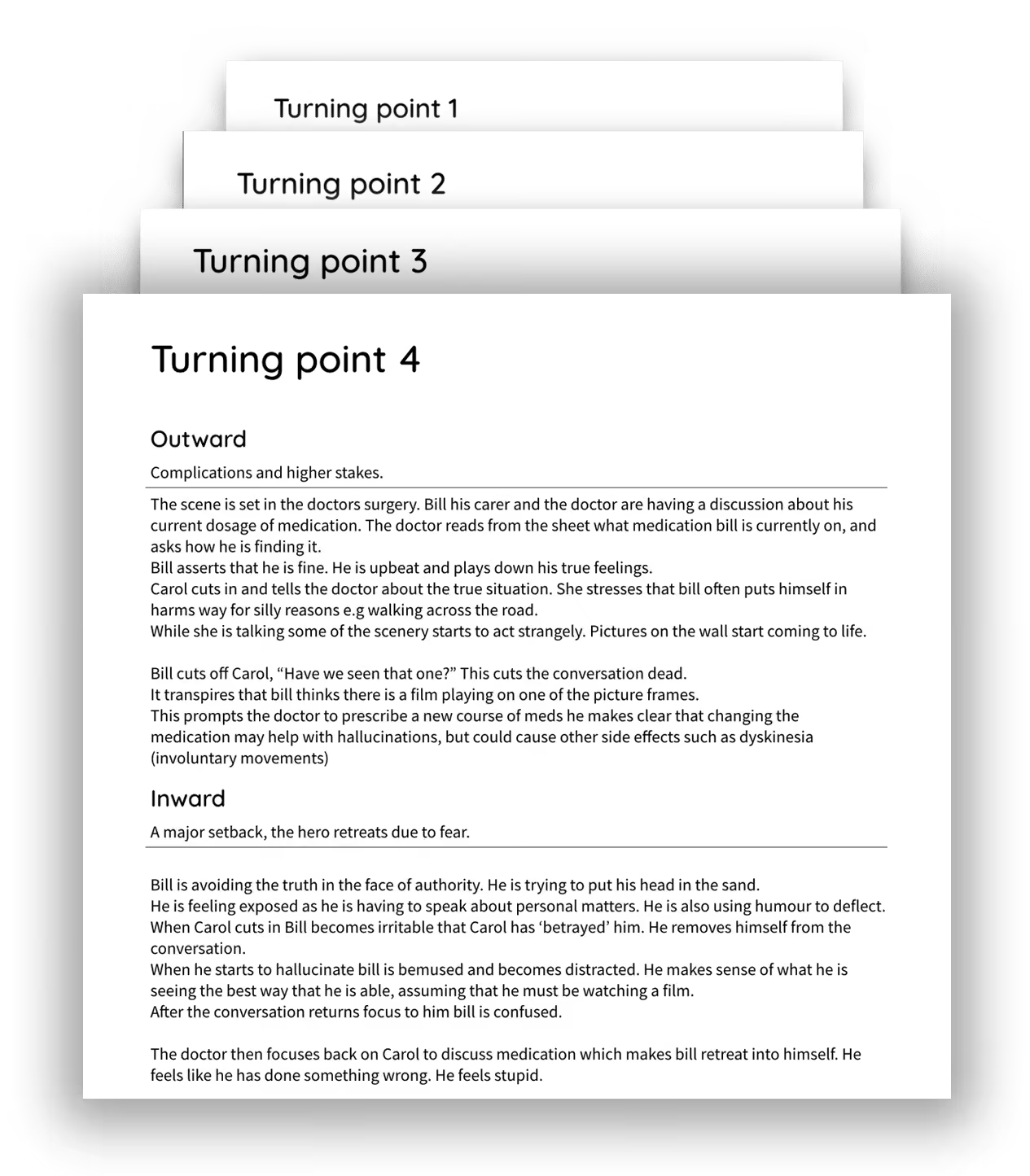
Once Bill's emotional journey had taken shape, the next challenge was deciding which moments would define it.
Rather than building the experience around dramatic events, I focused on the ordinary moments that quietly reshape a person's life.
Losing confidence.
Avoiding social situations.
Learning to accept help.
Each turning point was chosen not because it was dramatic, but because it revealed something honest about living with Parkinson's.
Together, they became the emotional landmarks that guided the participant through Bill's story.
Designing Bill meant balancing authenticity with empathy.
His appearance needed to acknowledge the realities of Parkinson's without reducing him to the condition itself.
Instead of relying on obvious visual stereotypes, I focused on subtle details in his posture, expression and movement that quietly acknowledged the gradual effects of Parkinson's.
Authenticity came from observing the small adaptations people make in everyday life.
Bill's clothing was chosen for comfort. The small pouch around his neck was inspired by my stepdad, who found carrying his phone there easier and more comfortable than keeping it in his trouser pocket.
Together, these details helped ground Bill in everyday reality rather than reducing him to a diagnosis.
When considering Bill's movement, the challenge was different. The intention wasn't to catalogue symptoms, but to portray them in a way that felt recognisable to those familiar with Parkinson's while remaining natural to everyone else.
A slight forward lean, reduced arm swing, shorter steps and moments of freezing were all carefully considered to help Bill move in a way that felt authentic without becoming exaggerated.
Parkinson's can make emotion difficult to read.
Reduced facial expression, changes in gaze and less frequent blinking can all contribute to an appearance that feels distant, despite the emotions beneath.
This presented a unique design challenge: how do you create a character that remains authentic while still allowing users to connect with the person behind the condition?
Creating believable expressions became an exercise in restraint. Instead of exaggerating eyebrow angles, eyelids or eye shapes to communicate emotion, I explored how the smallest changes in Bill's eyes could suggest what he was feeling without undermining the authenticity of the condition.
Authenticity depended on more than expressive features alone.
Bill's facial rigidity, drooping mouth and reduced expression needed to be represented honestly, but without allowing those characteristics to define how he was perceived.
The goal wasn't to soften the condition, but to ensure it never became Bill's defining characteristic.
Unlike the rest of Bill's character, his hands would remain visible throughout much of the experience.
As users prepared food, buttoned clothing and completed everyday tasks, they would quite literally be inhabiting Bill's body.
This made the design of his hands especially important.
Their proportions, posture and resting position needed to reflect the physical characteristics associated with Parkinson's
From stiffness and reduced dexterity to the characteristic positioning of the fingers—while remaining natural enough for users to instinctively accept them as their own.
The character studies informed every stage of Bill's development as he transitioned from sketches into a fully realised 3D model.
Working collaboratively with the 3D artists, we ensured the proportions, posture and physical characteristics established during the design process were faithfully carried through into the final character.
This iterative process allowed us to continually refine Bill's appearance, ensuring the authenticity established in the concept phase was preserved throughout production.
For the opening scene, I wanted to create an environment that immediately felt familiar, personal and lived in.
Drawing on my own experiences of my parents home, I remembered his armchair as a place of comfort, where everything he needed was always within reach. It became the inspiration for Bill's living room.
Every object was chosen with purpose. His walker remained within reach as a symbol of independence, a mug with a straw made drinking easier while reducing the risk of spills and embarrassment, and the television remote offered a connection to the outside world. Together, these small details reflected the subtle adaptations that had become part of Bill's daily life.
Home needed to feel safe. As Bill's world gradually became smaller, his living room became a sanctuary. Warm lighting, soft colours and familiar surroundings reinforced that sense of comfort, creating a deliberate contrast with the clinical environments that would later become an unavoidable part of Bill's life.
Early concepts explored a simplified, low-poly visual style that allowed environments and assets to be created quickly.
Rather than treating these as finished artwork, they became a way of rapidly testing ideas and establishing the overall experience.
Developing the character and environment in parallel allowed us to validate the experience before committing to a final visual language.
By focusing on the experience first, we were able to experiment with interactions, pacing and storytelling before committing to a final artistic direction.
Rapid prototyping helped us validate the experience, but it also highlighted an important lesson:
visual style directly influences emotional engagement.
The low-poly aesthetic allowed us to iterate quickly, yet its abstraction created distance between the user and Bill's world. Everyday objects became less recognisable and familiar spaces lost some of their warmth, making it harder to establish the empathy the experience depended upon.
Adopting a more realistic visual style allowed the environment to become richer and more personal.
Familiar objects reinforced Bill's daily routines and subtly hinted at the adaptations he had made to maintain his independence.
Rather than adding detail for its own sake, every element contributed to a home that felt warm, believable and lived in, creating the emotional foundation for the rest of the experience.
Storyboarding for virtual reality required a fundamentally different way of thinking.
Traditional storyboards assume the audience observes events from the outside. In VR, the participant becomes part of the scene, making their perspective central to the storytelling. Every sequence had to answer a different set of questions:
Where is the participant positioned?
What naturally draws their attention?
How do they interact with the environment?
And what should they be feeling in that moment?
For 'Walk a Mile', this resulted in a series of carefully planned sequences that balanced narrative, interaction and environmental storytelling, allowing participants to discover Bill's world at their own pace without losing sight of the moments that mattered most.
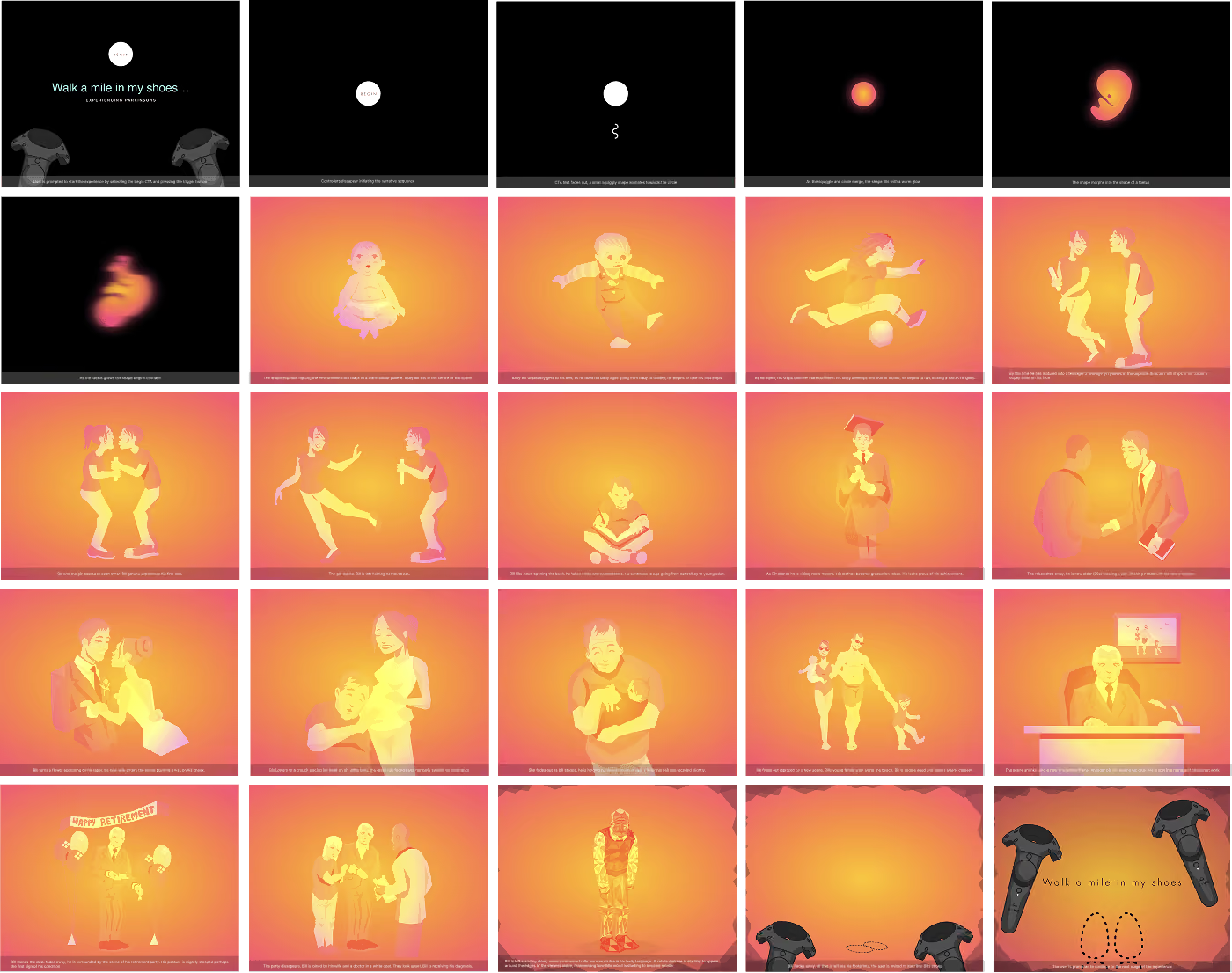
Not every aspect of Bill's experience could be communicated through first-person interaction alone.
Some moments required context or perspectives that simply weren't possible while participants were embodying the character.
To bridge these gaps, cinematic sequences were woven throughout the experience, providing emotional context and illustrating key moments that participants couldn't directly experience.
The opening sequence, for example, establishes Bill's life before his diagnosis, while later scenes explain the progression of the condition and reveal perspectives unavailable during first-person interaction.
Environmental interactions required a different approach to storyboarding.
Each task was mapped from the participant's first-person perspective, breaking the sequence into individual actions, focal points and responses from the surrounding environment.
The storyboards plotted which objects needed to be found and used, the order of each interaction, and how other characters responded throughout the scene: from family members to strangers in public spaces.
Mapping each element ensured participants always understood where to look and what to do next.
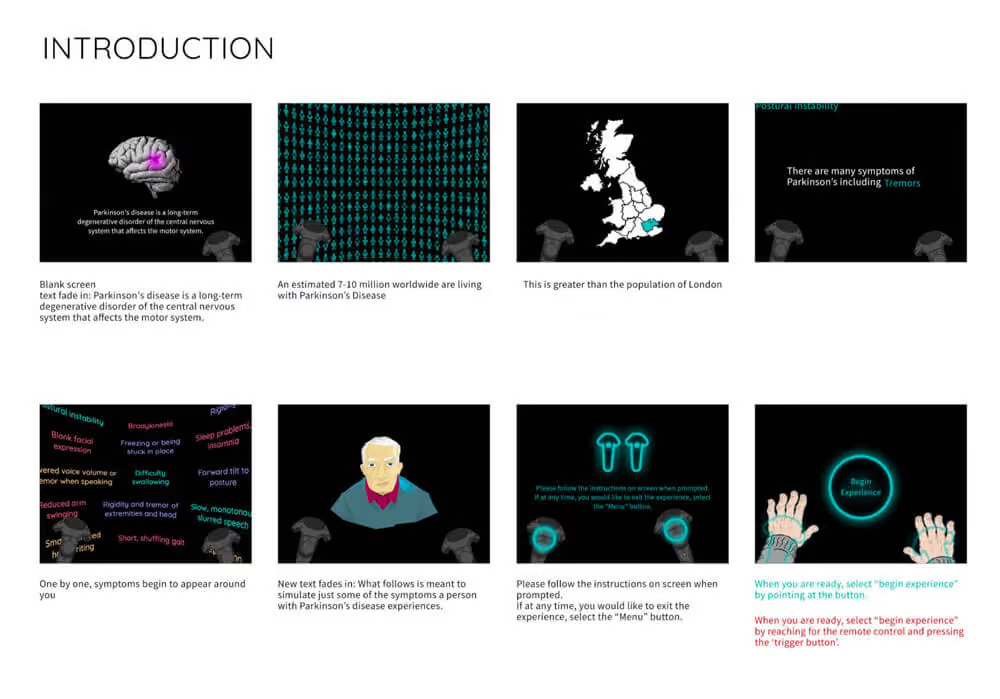
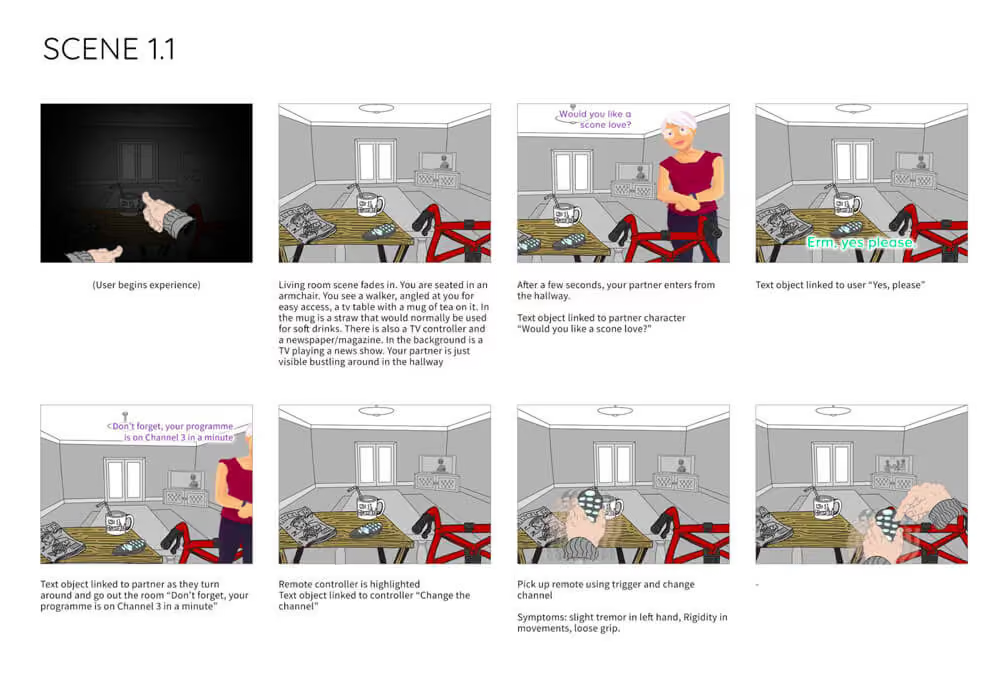
Once the storyboards were established, animatics allowed us to test how each sequence would feel in motion before committing to production.
They became an important tool for refining pacing, validating assumptions and ensuring participants' attention naturally fell where it needed to.
They proved particularly valuable when exploring moments of tension.
In one sequence, participants waited on a busy train platform where the pressure to board quickly contrasted with Bill's limited mobility.
Testing the pacing ensured the scene felt believable, allowing the tension to build naturally.
The first interactive prototype allowed participants to step into Bill's world and experience how the interactions felt in VR.
Although symptom simulation was planned for a later phase, the prototype successfully validated the interaction model and environmental design.
Object manipulation, environmental effects and subtle ambient animation helped transform the living room from a digital space into one that felt believable and lived in.
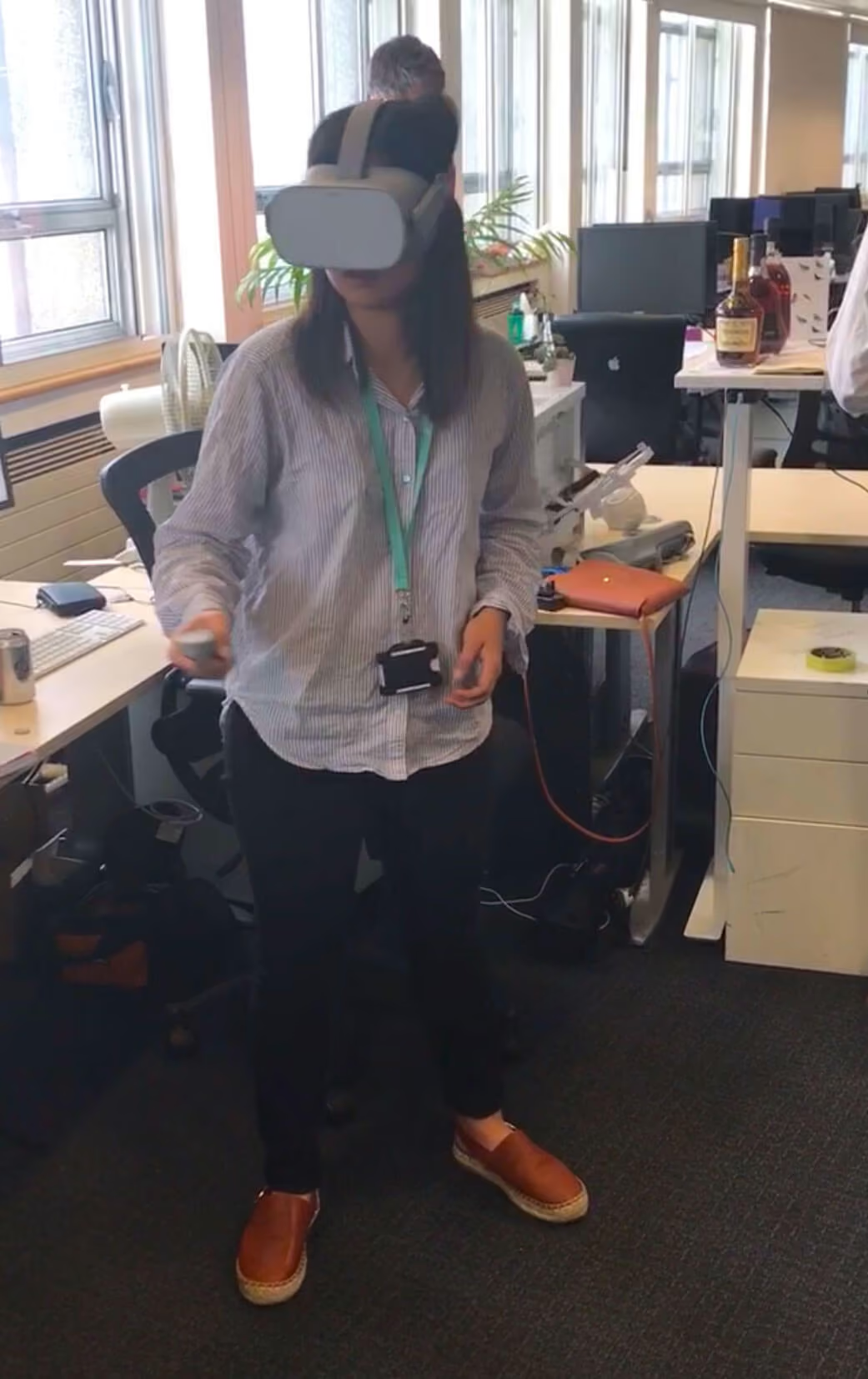
The prototype was shared with a range of audiences throughout its development, providing valuable opportunities to gather feedback from industry peers but more importantly, people living with Parkinson's and their carers.
Representatives from Parkinson's UK visited our studio to experience the prototype firsthand. They responded positively to the concept and expressed an interest in following the project's future development.
The prototype was also presented during Design Week, where it received encouraging feedback from designers and other industry professionals.
The most valuable feedback came from the Parkinson's UK community in Worthing. Presenting the project at different stages, alongside attending carers' meetings, allowed me to hear directly from people living with Parkinson's and those supporting them.
These conversations challenged assumptions, refined our language and reinforced the importance of representing lived experience with care and authenticity.
.avif)
Like many internal innovation projects, 'Walk a Mile' eventually gave way to commercial priorities as client work resumed.
Although development came to an end before the experience could be fully realised, the project had already achieved something meaningful.
During lockdown, I continued exploring alternative directions, including a more accessible, cinematic version that could reach a wider audience without the need for specialist VR hardware.
While these ideas remained conceptual, they reinforced the project's central ambition: using immersive storytelling to build empathy and understanding.
For me, the value of 'Walk a Mile' was never measured by whether it shipped. It demonstrated the agency's willingness to invest in meaningful ideas, challenged me to think differently about empathy and accessibility, and pushed my skills across research, storytelling, interaction design and immersive experience design.
Walk a Mile changed the way I thought about design.
It challenged me to think beyond interfaces and ask a different question: how can design help someone understand a life they've never lived?
Although the experience never reached full production, it remains one of the most influential projects of my career. It continues to shape how I approach design today, reminding me that meaningful work isn't always about solving technical problems, but about creating understanding, empathy and human connection.
I still hope that one day I'll have the opportunity to bring Walk a Mile to life as the experience it was always intended to become.
UX/UI
BRANDING
MOTION
A secure AI system giving factory workers instant, reliable access to the right knowledge, helping businesses work faster with less downtime. Designed to support people, not replace them.
View ProjectUX/UI
Bringing a new customer first product to market, fast.
E.ON approached us with their digital ambition to become the market leader in utilities, radically transforming their organisation to become a digital-first business.
UX/UI
Making car buying easier. British Car Auctions came to us to design, develop, and launch their first-ever B2C digital venture. With other traditional sites filled with over-complicated technical language and figures causing user frustration. Cinch was the answer.
UX/UI
BRANDING
Disrupted by new digital entrants to the market and heightened customer expectations Halifax knew that the loss of 1 million users a month from the homepage needed to be addressed. Working with us, we looked to transform the customer experience.
View ProjectUX/UI
Working closely with ŠKODA we designed, developed and launched a staff facing iPad application across over 150 dealerships across the UK, giving ŠKODA retail staff the best digital tool to improve both the staff and customer experiences.
View ProjectUX/UI
ILLUSTRATION
ANIMATION
MOTION
One of the proudest moments in my career to date, originally dubbed 'Project P' (working title), a VR experience (built in Unreal) aimed at illuminating the everyday challenges faced by disabled individuals.
View Project